Deconstructing the Paracas Mummy Bundle Mask: An Avant-Garde Analysis
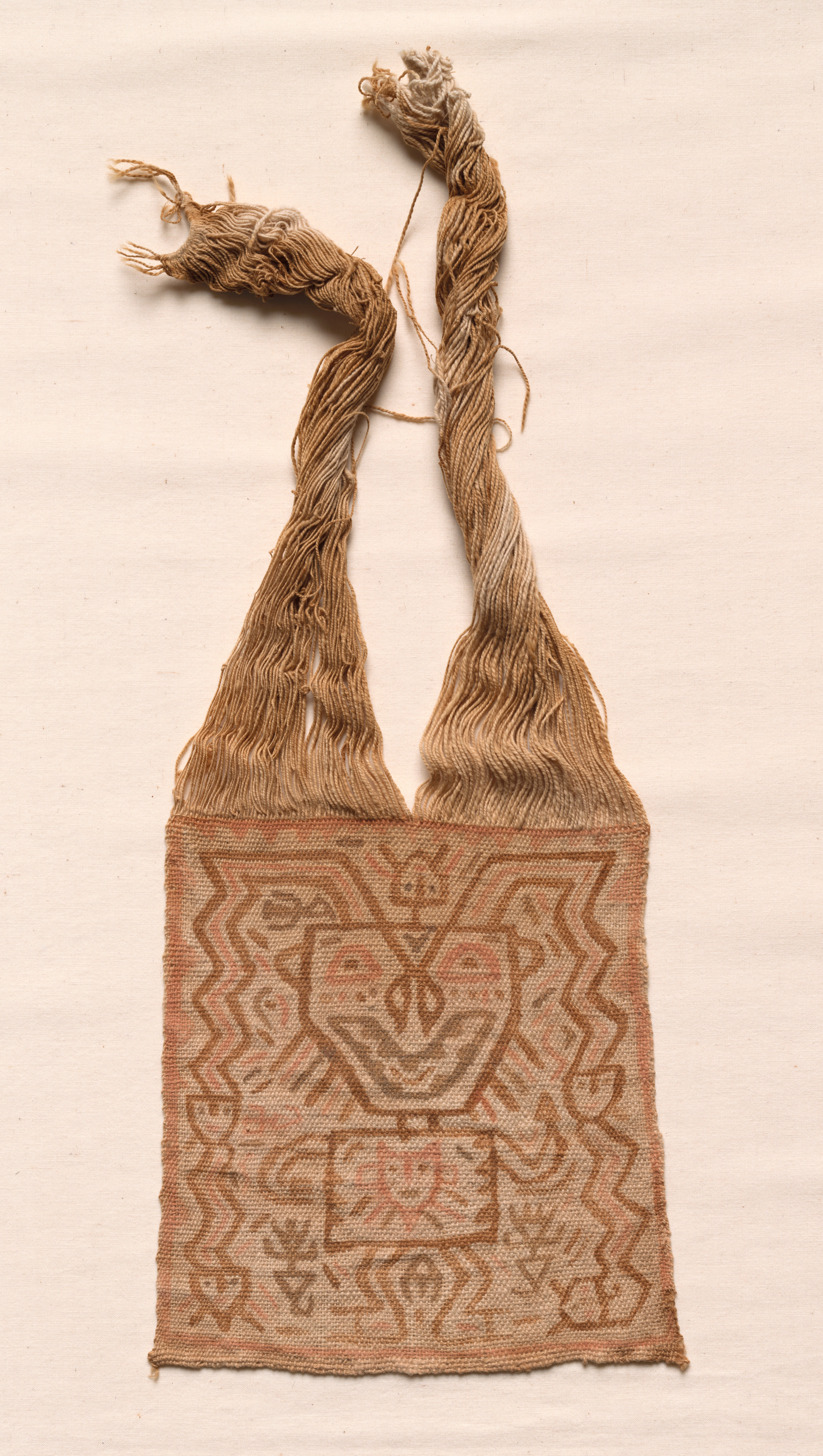
At Zoey Fashion Lab, deconstruction is not merely an act of disassembly; it is a methodology for uncovering latent narratives, challenging temporal hierarchies, and reanimating the aesthetic DNA of ancient artifacts within a contemporary, avant-garde framework. The subject of this analysis—a painted, plain warp-faced cotton mask from a Paracas-style mummy bundle, originating from the Ocucaje site in Peru’s Ica Valley (circa 200 BCE–200 CE)—is a profound case study. This object, far from being a static relic, is a dynamic text of cultural collision, ritual technology, and material intelligence. We will dissect its technical, symbolic, and textural properties to reveal how it prefigures and resonates with the principles of avant-garde fashion design, particularly in its defiance of conventional structure, its embrace of surface as narrative, and its radical recontextualization of the human form.
Technical Foundation: The Plain Warp-Faced Canvas
The mask’s substrate—a plain warp-faced cotton cloth—is deceptively simple. In textile terms, a warp-faced weave prioritizes the vertical threads, creating a dense, stable, and slightly ribbed surface. This is not a fabric designed for drape or fluidity; it is a structural membrane, a taut skin intended to receive pigment and hold its form. For the Paracas weavers, this technical choice was one of intentionality. The cotton, native to the region, provided a smooth, absorbent ground for mineral and vegetal paints. The warp-faced structure, with its high thread count, ensured that the painted designs would not distort the cloth’s integrity.
From an avant-garde perspective, this cloth functions as a precursor to the conceptual “blank canvas” of modern design. It is a raw, unadorned plane that rejects complex patterning in its weave to foreground the painted intervention. The warp-faced structure also creates a subtle, repetitive rhythm—a grid-like foundation that the painted imagery both respects and disrupts. This tension between the ordered weave and the chaotic, symbolic painting is a core principle of deconstructivist fashion: the underlying structure is always visible, always in dialogue with the surface treatment. In a Zoey Fashion Lab context, this mask would be analyzed not as a finished garment but as a material manifesto, where the cloth’s technical properties dictate the possibilities of adornment.
Painted Surface: The Archive of Ritual and Collision
The painted imagery on this mask is not decorative in the Western sense; it is performative and totemic. Paracas mummy bundles were complex funerary assemblages, and the mask served as a portal, a face for the deceased that facilitated their journey into the afterlife. The pigments—likely derived from cinnabar (red), charcoal (black), and ochre (yellow, brown)—were applied in bold, geometric patterns: stylized feline faces, serpentine motifs, and abstracted human features. These are not naturalistic portraits but compressed symbols of power, fertility, and the liminal space between life and death.
The reference to “Archive Resonance” and the sixteenth to seventeenth centuries is crucial here. This period marks the violent collision of Andean and European visual cultures. The Paracas mask, though pre-Columbian, becomes a premonition of this encounter. Its painted surface is a pre-colonial archive—a system of visual communication that the Spanish conquest would attempt to overwrite. In the avant-garde lens, this mask embodies the concept of palimpsest: a surface on which multiple histories are written and partially erased. The geometric abstractions are not static; they are residues of a ritual technology that the conquistadors could not fully decode. For Zoey Fashion Lab, this invites a design practice that treats fabric as a contested space, where ancient patterns are overlaid with contemporary marks, creating a visual dissonance that speaks to cultural trauma and resilience.
The mask’s chromatic palette—deep reds, blacks, and earth tones—is also significant. These are not soft, pastel hues but intense, mineral-based colors that evoke blood, soil, and night. In avant-garde fashion, such a palette is often used to challenge notions of beauty and comfort. The red is not romantic; it is visceral. The black is not absence; it is depth and mystery. The mask’s painted surface does not seek to please the eye but to confront the viewer with the raw materiality of ritual. This aligns with the deconstructivist impulse to reject ornamentation in favor of raw, expressive mark-making.
Deconstructing the “Mask” as Garment
In Western fashion, a mask is an accessory, a face covering that can be removed. In the Paracas context, the mask is an integral component of the mummy bundle, which itself is a form of garment—a second skin for the dead. The mask is not worn in life but in death, and its function is not to conceal but to reconstruct identity. The deceased’s face is replaced by a painted textile face, a transformation that echoes the avant-garde interest in the body as a site of reinvention.
This mask challenges the binary of clothing versus object. It is neither a garment nor a sculpture but a hybrid artifact that occupies a liminal space. Its warp-faced cloth is soft yet rigid when painted, pliable yet permanent. For Zoey Fashion Lab, this suggests a design philosophy that blurs the boundaries between textile, armor, and canvas. The mask’s form—often rectangular or trapezoidal with eye slits—is geometric and abstract, prefiguring the Cubist and Constructivist tendencies in early twentieth-century avant-garde art. It is a face reduced to its essential planes, a proto-modernist abstraction that anticipates the work of artists like Picasso or Malevich, but with a ritual purpose that transcends aesthetic formalism.
Avant-Garde Resonance: The Mask as Radical Interface
How does this ancient object speak to the avant-garde today? First, it embodies the principle of decontextualization. Removed from the mummy bundle and placed in a museum or design lab, the mask becomes a floating signifier—a fragment of a lost whole. This fragmentation is a core strategy of deconstructivist fashion: the garment is never complete, always referencing an absent body or context. The mask’s isolated presence invites the designer to imagine the missing bundle, the missing ritual, the missing wearer. This is not nostalgia but a creative provocation to reconstruct meaning from fragments.
Second, the mask’s painted surface offers a template for surface narrative. In avant-garde fashion, fabric is a canvas for storytelling, often through direct painting, printing, or embroidery. The Paracas mask demonstrates that such narrative need not be literal. Its geometric abstractions are a visual code that requires cultural fluency to read. This challenges the designer to create surfaces that are not merely decorative but semiotically dense, inviting the viewer to decode layers of meaning. The mask’s bold, graphic quality also resonates with contemporary streetwear and conceptual design, where large-scale patterns and symbolic imagery dominate.
Third, the mask’s material honesty is a lesson in sustainable deconstruction. The cotton warp-faced cloth is not disguised or over-engineered. Its weave is visible, its painted surface is unvarnished, its edges are raw. This is a design ethos that values authenticity over polish. In an age of synthetic blends and digital prints, the Paracas mask reminds us that textile truth—the integrity of fiber and pigment—can be a radical statement. For Zoey Fashion Lab, this translates into a commitment to natural materials, visible construction, and the intentional imperfection of handwork.
Conclusion: The Mask as Mirror
The Paracas mummy bundle mask is not a relic to be preserved in glass but a provocative interlocutor for the avant-garde designer. Its plain warp-faced cotton is a canvas for ritual transformation; its painted imagery is an archive of cultural collision; its form is a radical abstraction of the human face. By deconstructing this object, Zoey Fashion Lab uncovers principles that are timeless yet urgent: the power of surface as narrative, the beauty of material honesty, and the necessity of reanimating ancient technologies for contemporary expression. This mask does not belong to the past. It is a blueprint for the future of fashion—a future where garments are not merely worn but inhabited, where every stitch and stroke carries the weight of history, and where the body becomes a living archive of cultural resonance. In the hands of the deconstructionist, the mummy bundle mask is reborn as a radical interface between the dead and the living, the ancient and the avant-garde.