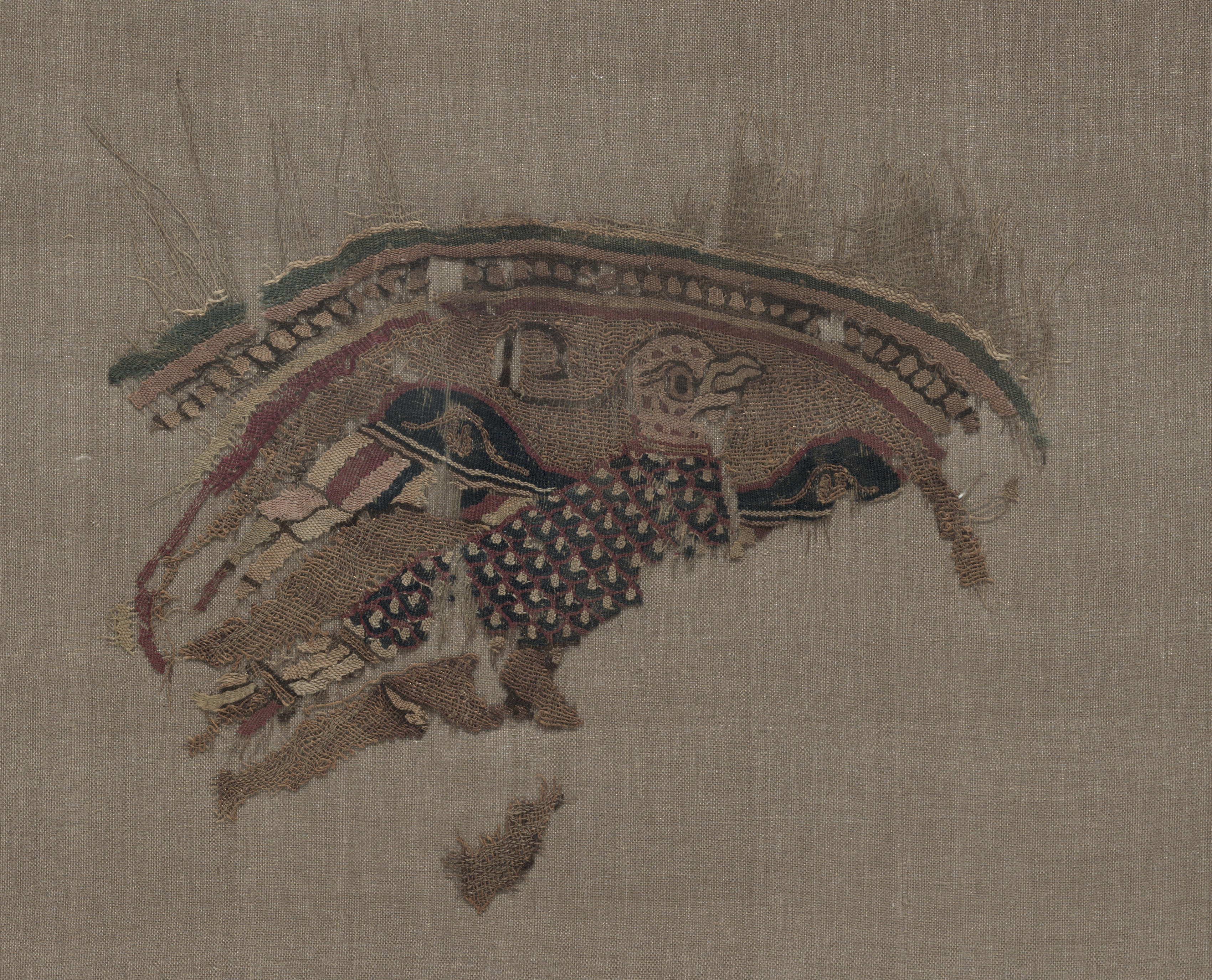
Fragmentary Roundel with Eagle in Gold Ground: A Deconstruction of Fatimid Power and Textile Alchemy
At Zoey Fashion Lab, we approach historical artifacts not as relics to be preserved in amber, but as living documents of material intelligence. The Fragmentary roundel with eagle in gold ground, a textile from Egypt’s Fatimid period (909–1171 CE), is precisely such a document. Composed of linen, silk, and gold filé, and executed in plain weave with inwoven tapestry weave, this fragment is a testament to the sophisticated interplay of power, symbolism, and technical mastery. For the avant-garde designer, it offers a radical lexicon of form, texture, and narrative—a blueprint for deconstructing imperial opulence into contemporary wearable art.
Materiality as Political Theology
The choice of materials in this roundel is not merely aesthetic; it is a declaration of sovereignty. Linen, derived from flax, was a staple of Egyptian textile production, symbolizing purity and local resourcefulness. Silk, imported from China via the Silk Road, signified cosmopolitan reach and economic power. Gold filé—fine gold thread wrapped around a silk or linen core—elevated the fabric to a quasi-sacred status, reflecting the Fatimid caliph’s divine mandate. This tripartite materiality mirrors the Fatimid state’s ideology: rooted in Egyptian soil, connected to global trade, and imbued with celestial authority.
For the fashion lab, this suggests a radical material practice: deconstructing hierarchy. We might re-imagine the roundel not as a static object but as a process—layering humble linen with luminous metal threads, allowing the warp and weft to speak of conquest and commerce. The fragment’s incomplete state is itself a provocation: what if we emphasize the missing sections, using them as negative space to suggest the erasure of history? A garment could be woven with intentional gaps, where the wearer’s body becomes the missing piece, completing the narrative.
The Eagle: Symbolism in Flight
At the roundel’s center, the eagle is a potent emblem. In Fatimid iconography, the eagle often represented power, victory, and the caliph’s role as protector of the faithful. Its wings spread symmetrically, talons gripping, gaze forward—a heraldic beast frozen in eternal vigilance. Yet the fragmentary nature of the roundel disrupts this stability. The eagle is partial, its edges frayed, its gold ground bleeding into the linen. This incompleteness mirrors the volatility of political power: even the mightiest dynasty is subject to decay.
An avant-garde interpretation might fragment the eagle further. Imagine a garment where the eagle motif is deconstructed into its constituent parts—a wing here, a talon there—scattered across the fabric like a puzzle. The wearer becomes the assembler, each gesture reconfiguring the symbol. Alternatively, the eagle could be abstracted into geometric forms: the curve of its wing becomes an arc, the eye a circle, the beak a triangle. This reduction speaks to the Fatimid fascination with geometry and mathematics, while also echoing contemporary digital aesthetics.
Technical Alchemy: Plain Weave Meets Tapestry
The technical construction of the roundel is a study in contrasts. The plain weave of the ground fabric provides a stable, utilitarian base—a canvas for the more complex inwoven tapestry weave. In tapestry, the weft threads are manipulated to create patterns, allowing for detailed imagery and color transitions. The gold filé, woven into the tapestry sections, catches light, creating a shimmering halo around the eagle. This interplay of matte linen and luminous gold is a tactile dialectic: the mundane and the sublime coexisting in the same plane.
For the fashion lab, this technique invites hybrid construction methods. Consider a garment where the body is composed of a simple weave—perhaps organic cotton or hemp—while the decorative elements are woven in metallic threads using a jacquard or hand-loom technique. The contrast between the two weaves creates a dynamic surface that changes with movement and light. Alternatively, we could invert the hierarchy: make the tapestry weave the primary structure, with the plain weave appearing only as a ghostly ground, suggesting the fading of history.
Archive Resonance: The Echo of Cultures
The archival note accompanying this artifact speaks of “cultural collision and aesthetic fusion” between the sixteenth and seventeenth centuries—a period well after the Fatimid era. This temporal displacement is significant. The roundel, though Fatimid, was likely preserved, traded, or reused in later contexts, accruing new meanings. It is a palimpsest, its original symbolism overlaid by subsequent interpretations. The gold ground, once a sign of caliphal glory, might have been repurposed as a relic, a curiosity, or a source of raw material.
In an avant-garde collection, this resonance could be materialized through layering and juxtaposition. A garment might combine Fatimid-inspired motifs with references to later periods—Renaissance brocade, Ottoman silk, or even digital prints of satellite imagery. The fragmentary nature of the roundel becomes a design principle: incompleteness as a form of honesty. We acknowledge that we can never fully reconstruct the past; we can only create new narratives from its remains.
Deconstructing the Roundel for the Avant-Garde
To translate this fragment into a contemporary garment, Zoey Fashion Lab proposes the following deconstructive strategies:
1. Material Disruption: Replace gold filé with recycled metallic fibers or hand-spun copper wire. The linen could be replaced with bio-fabricated cellulose, echoing the plant-based origins of the original. The silk might be substituted with peace silk or a lab-grown alternative, questioning the ethics of luxury.
2. Pattern as Process: The eagle motif should not be a static appliqué but a generative pattern. Using algorithmic design, the eagle could be fragmented and recomposed based on the wearer’s biometric data—heart rate, movement, temperature. The garment becomes a living archive, responding to the present.
3. Wearable Archaeology: The roundel’s frayed edges and missing sections can be celebrated rather than hidden. A coat might have raw, unraveling hems, with gold threads trailing like roots. Pockets could be shaped like the eagle’s talons, functional yet symbolic. The garment’s interior might be lined with a map of the Silk Road, connecting the wearer to the trade routes that brought silk and gold to Egypt.
4. Narrative Layering: The roundel’s history is not linear. A dress could incorporate multiple layers, each representing a different era: the Fatimid base, a Mamluk overlay, an Ottoman repair, a modern conservation stitch. The wearer peels back layers to reveal the object’s biography, making history tactile.
Conclusion: The Fragment as Future
The Fragmentary roundel with eagle in gold ground is more than a textile; it is a manifesto. It speaks of power and fragility, of global exchange and local craft, of the sacred and the profane. For Zoey Fashion Lab, it is a call to arms—or rather, to needles and looms. By deconstructing this fragment, we do not destroy it; we reanimate it, allowing it to speak to our time. The eagle may be broken, but its flight continues in the warp and weft of our design. The gold ground may be tarnished, but its light still guides us toward a future where fashion is not mere adornment, but a form of critical inquiry.