Deconstructing the Myth: Perseus and Andromeda in the Zoey Fashion Lab
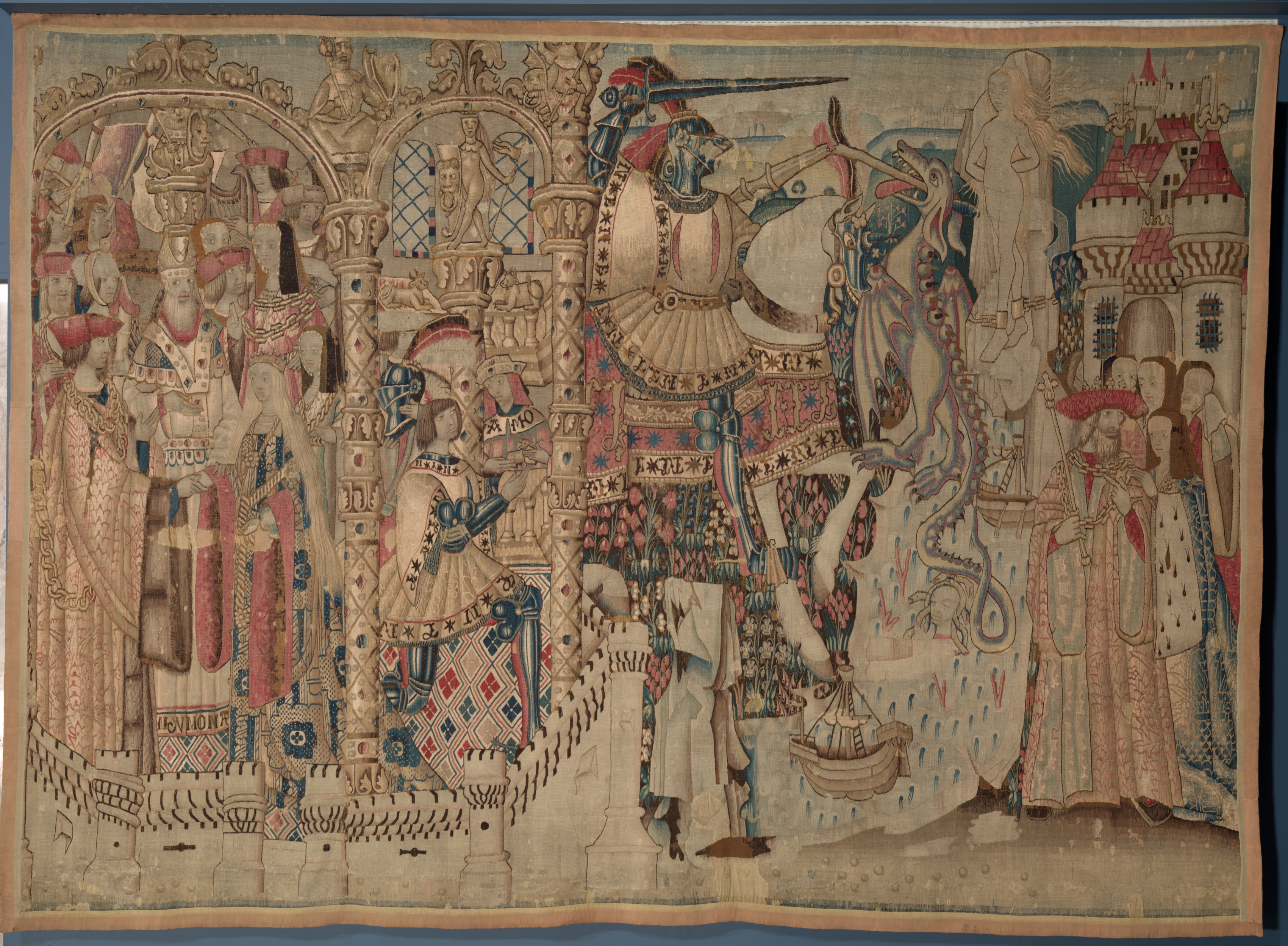
At Zoey Fashion Lab, the role of the Chief Fabric Deconstructionist is to dissect not only the physical threads of a textile but also the narrative, cultural, and aesthetic DNA woven into its very structure. Today, we turn our analytical gaze to a remarkable artifact: a tapestry depicting the Story of Perseus and Andromeda, originating from the Netherlands in the early 16th century. Constructed from wool and silk in a complex tapestry weave, this piece is far more than a decorative relic; it is a coded message from a bygone era, a map of power, mythology, and material innovation. Our deconstruction will explore its technical anatomy, its symbolic resonance, and its radical potential for reinterpretation within the avant-garde framework of Zoey Fashion Lab.
Technical Anatomy: The Weave as a Structural Narrative
The tapestry's primary materiality—wool and silk—immediately establishes a dialogue of contrasts. The wool, thick and matte, provides the structural backbone, a grounding force akin to the earthbound figures of Perseus and the monster. The silk, lustrous and fine, creates highlights, shadows, and the illusion of depth, particularly in the rendering of Andromeda’s pale skin and the shimmering sea. This is not a simple binary; it is a symbiotic relationship. The wool absorbs light, creating a sense of weight and permanence, while the silk reflects it, introducing movement and ethereality. In the early 16th-century Netherlands, this combination was a statement of wealth and technical mastery, as silk was a costly import. The weave itself—a dense, warp-faced tapestry structure—allowed for the creation of intricate, painterly scenes without the need for a loom’s shuttle to traverse the full width. Instead, weavers worked from the back, following a cartoon (a full-scale design) to build up the image bobbin by bobbin.
Our deconstruction reveals a New DNA Strand hidden within this weave. The "DNA" here is not biological but structural and conceptual. It refers to the underlying code of the tapestry: the repeated motifs, the color palette’s emotional temperature, and the spatial logic that dictates how the eye moves across the scene. For instance, the use of vertical warps creates a sense of upward aspiration, mirroring Perseus’s heroic flight. The horizontal wefts, by contrast, anchor the composition, representing the earthly realm of the monster and the captive Andromeda. The tension between these axes is the strand we will extract for avant-garde reinterpretation.
Symbolic Deconstruction: The Myth as a Fabric of Power
The myth of Perseus and Andromeda is a classic hero’s journey: a young man slays a sea monster to rescue a princess, winning her hand and his own glory. But our deconstruction must look beyond the surface. In the early 16th-century Netherlands, this story was not merely entertainment. It was a political and moral allegory. Perseus, often depicted with a sword and the severed head of Medusa, represents the triumph of reason over chaos, of civilization over the untamed. Andromeda, chained to a rock, embodies the passive, vulnerable state of the kingdom awaiting salvation. The monster, Cetus, is the embodiment of external threat—perhaps the rising waters of the North Sea, the threat of foreign invasion, or the chaos of religious upheaval.
The tapestry’s composition likely emphasizes hierarchical scale: Perseus is rendered larger than Andromeda, who is larger than the monster, reinforcing the social order of the time. The colors—deep blues for the sea, rich reds for Perseus’s cloak, pale whites for Andromeda’s skin—create a visual hierarchy that mirrors the narrative one. The silk threads used for Andromeda’s flesh tone are not accidental; they signify her purity, her value as a commodity to be rescued and claimed. The wool of the monster’s scales suggests a raw, untamed nature. This is a fabric of power dynamics, woven into every thread.
Avant-Garde Reinterpretation: The Zoey Fashion Lab Lens
For Zoey Fashion Lab, the tapestry is not a finished product but a starting point for radical transformation. Our avant-garde approach demands that we extract the New DNA Strand—the underlying code of tension, hierarchy, and material dialogue—and re-spin it into something that challenges contemporary norms. Here are three pathways for deconstruction and reconstruction:
1. Inversion of the Hero-Victim Dichotomy: The traditional tapestry centers Perseus as the active agent. Zoey Fashion Lab would deconstruct this by emphasizing Andromeda’s latent power. Imagine a garment where the silk threads are pulled from the tapestry’s background and re-woven into a sheer, armor-like bodice. The wool, once the monster’s scales, becomes a heavy, draped skirt that suggests chains but also weight and resistance. The hero’s cloak is reduced to a single, frayed thread—a mere suggestion. This piece would invert the gaze, making Andromeda the central, defiant figure, her chains reimagined as a statement of strength.
2. Deconstruction of the Monster as a Source of Beauty: The sea monster is typically a symbol of ugliness and threat. Our deconstruction would celebrate its textural complexity. The wool and silk blend of the monster’s form—with its rough, knotted surfaces and occasional shimmering highlights—can be extracted and re-purposed into a sculptural cape or headpiece. The monster’s scales become a pattern of overlapping, asymmetrical panels, sewn with visible, raw edges. This garment would not hide the monster’s form but flaunt it, challenging the binary of beauty and horror. The New DNA Strand here is the acceptance of chaos as a creative force.
3. The Tapestry as Wearable Architecture: The tapestry’s dense, woven structure is inherently architectural. Zoey Fashion Lab would explore this by creating a deconstructed dress that mimics the loom’s process. The garment would feature exposed warp threads—vertical lines of wool—that are left un-woven, creating gaps that reveal the body beneath. The weft threads, in silk, would be woven in irregular, interrupted patterns, suggesting the narrative’s fragmentation. This piece would be a literal fabric of time, where the early 16th-century story is visible as a ghostly trace, overlaid with modern, unfinished elements. The wearer becomes a living tapestry, a site of historical and contemporary collision.
Conclusion: The Eternal Thread
The Story of Perseus and Andromeda, woven in wool and silk in the early 16th-century Netherlands, is a testament to the power of textiles to encode myth, power, and material mastery. At Zoey Fashion Lab, our deconstruction is not an act of destruction but of revelation and re-creation. By isolating the New DNA Strand—the tension between warp and weft, the dialogue between wool and silk, the inversion of hero and victim—we transform a static artifact into a dynamic, avant-garde statement. The tapestry is not a relic; it is a living code, waiting to be re-read, re-woven, and re-worn. In the hands of Zoey Fashion Lab, the myth of Perseus and Andromeda becomes a new story: one of deconstruction, empowerment, and the eternal thread of human creativity.