Deconstructing the Pendant: An Avant-Garde Analysis of Baule Goldsmithing at Zoey Fashion Lab
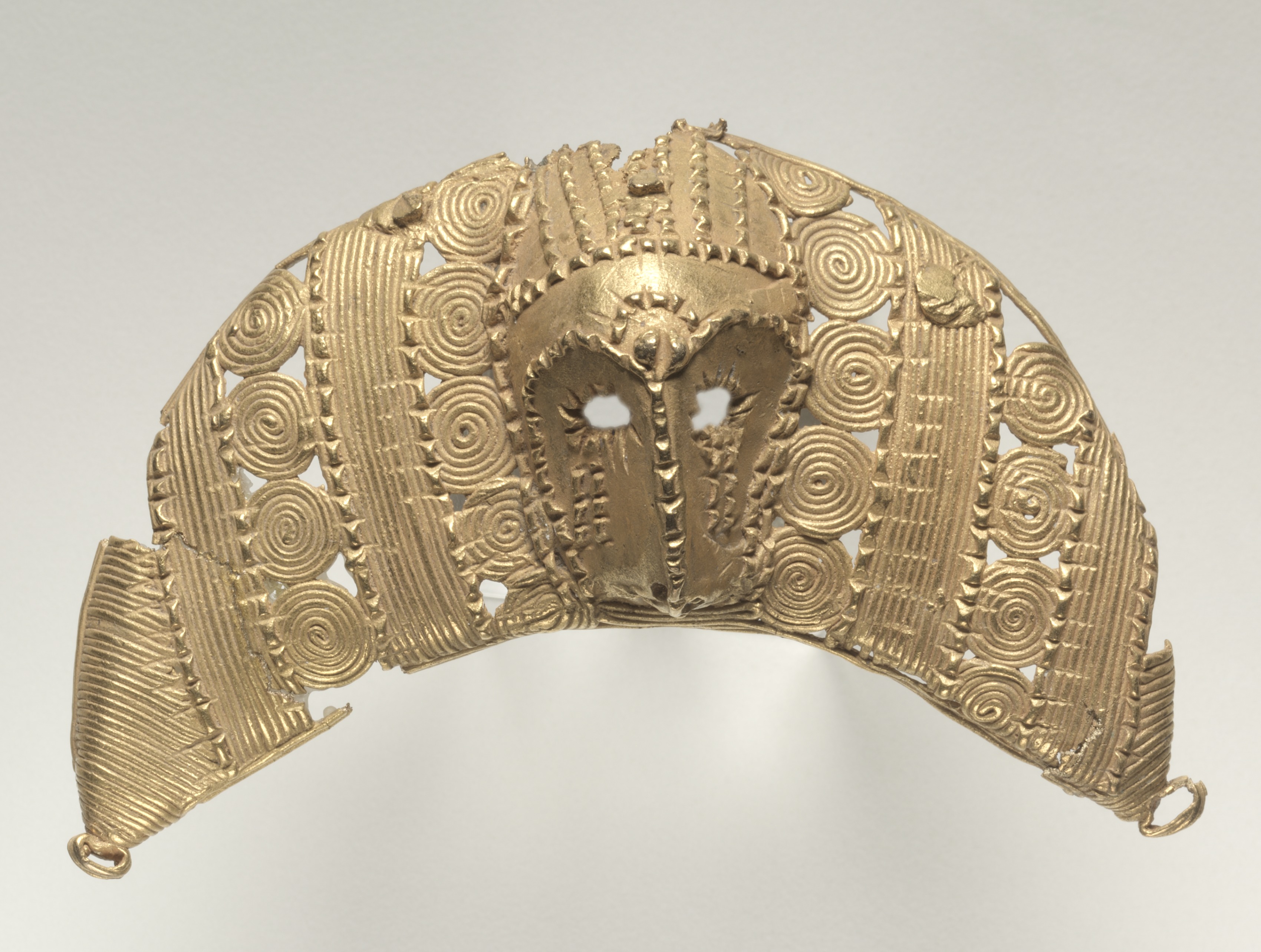
At Zoey Fashion Lab, we approach each artifact not as a static relic, but as a dynamic conversation between material, maker, and contemporary context. The subject of this analysis—a gold pendant from Côte d'Ivoire, attributed to the Baule-style goldsmithing tradition—presents a profound opportunity for deconstruction. Its technical execution, cultural resonance, and potential for avant-garde reinterpretation demand a rigorous examination. This piece, referenced through the evocative Archive Resonance of a mirror with split-leaf patterns and a sarcophagus-like narrative, embodies a duality that is both ancient and startlingly modern. We will dissect its origins, technical goldworking, and symbolic weight, ultimately proposing how Zoey Fashion Lab can harness its disruptive potential.
Origin and Cultural Context: The Baule Goldsmith’s Legacy
The pendant originates from West Africa, specifically Côte d'Ivoire, within the artistic sphere of the Baule people. Baule goldsmithing is not merely decorative; it is a language of status, spirituality, and social cohesion. Traditionally, gold was reserved for the elite—chiefs, priests, and lineage heads—and objects like pendants, rings, and staffs were worn during significant ceremonies. The Baule goldsmith, often a specialized artisan, employed lost-wax casting, a technique that allows for intricate, one-of-a-kind designs. This process involves sculpting a wax model, encasing it in clay, melting the wax, and pouring molten gold into the void. The result is a piece that is both technically flawless and deeply personal, bearing the unique hand of its creator.
The Baule aesthetic is characterized by refined abstraction and symbolic motifs. Split-leaf patterns, spirals, and geometric forms are common, often referencing nature, proverbs, or ancestral spirits. The Archive Resonance of a “mirror with split-leaf patterns” is particularly telling. In Baule culture, mirrors hold spiritual significance, often used in divination or as conduits to the spirit world. The split-leaf motif, meanwhile, suggests growth, duality, and the cyclical nature of life—a visual metaphor for the tension between the material and the immaterial. This pendant, therefore, is not just an ornament; it is a talisman, a narrative device, and a marker of identity. Its gold content is not mere wealth but a physical manifestation of the sun’s power and the enduring lineage of its wearer.
Technical Analysis: The Art of Gold in Lost-Wax Casting
From a technical standpoint, this pendant exemplifies the Baule goldsmith’s mastery. The gold used is likely a high-carat alloy, possibly 18k to 22k, which provides both malleability for intricate detail and a warm, lustrous finish. The lost-wax technique allows for undercuts, filigree-like elements, and a three-dimensionality that would be impossible with simple hammering or stamping. The pendant’s surface would have been carefully polished to a high sheen, while the recessed areas—the split-leaf patterns—retain a matte texture, creating a play of light and shadow. This contrast is crucial: it mimics the dual nature of the Archive Resonance, where one side is a “smooth silver mirror” and the other a “cold sarcophagus.”
The weight and balance of the pendant are equally deliberate. Baule pendants are often designed to hang against the chest, moving with the body, catching light, and producing a subtle sound. The gold’s density ensures a palpable presence, grounding the wearer in the material world while the design lifts the spirit toward the ancestral. The split-leaf pattern, when examined closely, reveals a rhythmic repetition that is almost hypnotic—a visual echo of the drumbeats and dances that accompanied its original use. This is not static art; it is kinetic, relational, and performative.
Symbolic Deconstruction: The Mirror and the Sarcophagus
The Archive Resonance provides a powerful lens for deconstructing this pendant’s symbolic weight. The “smooth silver mirror” represents clarity, reflection, and the present moment. In Baule cosmology, mirrors are thresholds: they reveal truth but also distort, showing the self as both known and unknown. The gold split-leaf patterns embedded in this mirror-like surface suggest that nature and culture are inseparable. The leaves are not random; they are organized, stylized, and controlled—a human intervention on the organic. This is a statement of power: the ability to shape the natural world into art.
Conversely, the “cold sarcophagus” speaks to death, memory, and the eternal. Sarcophagi are containers for the dead, but they also preserve narratives—carved reliefs that tell the story of a life. In this pendant, the split-leaf patterns become a language of life and death, growth and decay. The Baule believe that the dead continue to influence the living, and gold objects often serve as intermediaries. The pendant, therefore, is a portable sarcophagus: it holds the memory of ancestors, the wisdom of the lineage, and the promise of rebirth. Its dual-sided nature—mirror and sarcophagus—forces the wearer to confront their own mortality while celebrating their vitality.
Avant-Garde Recontextualization: Zoey Fashion Lab’s Intervention
For Zoey Fashion Lab, this pendant is not a historical curiosity but a blueprint for disruption. Our avant-garde ethos demands that we strip away the original context and rebuild it for the contemporary body. How can we honor the Baule goldsmith’s technical brilliance while subverting its traditional meaning? We propose three interventions.
First, material hybridity. The pendant’s gold can be juxtaposed with non-traditional materials: oxidized silver, recycled industrial rubber, or even digital screens. Imagine the split-leaf pattern rendered in laser-cut titanium, with a micro-LED display embedded in the “mirror” side, projecting shifting ancestral patterns. This would literalize the mirror-sarcophagus duality, making the pendant a living archive that updates with the wearer’s biometric data or social media feed. The gold remains as a tactile anchor, but the surface becomes a screen—a portal to both past and future.
Second, scale and wearability. Traditional Baule pendants are intimate, designed for close viewing. Zoey Fashion Lab can exaggerate the scale, creating a chest piece that extends from collarbone to waist, transforming the wearer into a walking sculpture. The split-leaf pattern could be exploded into a lattice, with gaps that reveal the skin beneath—a deliberate exposure of the body as the “sarcophagus” of the self. This challenges the notion of jewelry as adornment, pushing it toward armor or exoskeleton. The pendant becomes a statement of vulnerability and strength, a dialogue between the private self and the public gaze.
Third, narrative layering. The Archive Resonance suggests a story: the mirror and the sarcophagus are two sides of the same object. Zoey Fashion Lab can embed QR codes or NFC chips into the pendant’s reverse, linking to a digital archive of Baule oral histories, goldsmithing techniques, or contemporary African fashion. This transforms the pendant from a static object into an educational tool, a protest against cultural erasure, and a celebration of heritage in a digital age. The wearer becomes a curator, sharing the narrative with each interaction.
Conclusion: The Pendant as a Portal
This gold pendant from Côte d’Ivoire is far more than a beautiful object. It is a testament to Baule ingenuity, a vessel for spiritual and social meaning, and a mirror of the human condition. Through the lens of the Archive Resonance, we see its split-leaf patterns not as mere decoration but as a visual philosophy—a meditation on life, death, and transformation. At Zoey Fashion Lab, our deconstruction does not seek to erase this history but to amplify it, to find new frequencies in its ancient resonance. By reimagining the pendant through avant-garde materials, scale, and digital integration, we honor the Baule goldsmith’s legacy while pushing fashion toward its next evolution. This is not appropriation; it is collaboration across time. The pendant becomes a portal—between past and future, between Africa and the world, between the mirror and the sarcophagus. And it is our duty, as Chief Fabric Deconstructionists, to keep that portal open.