Deconstructing the Global Frontier: A Structuralist Manifesto for SS26
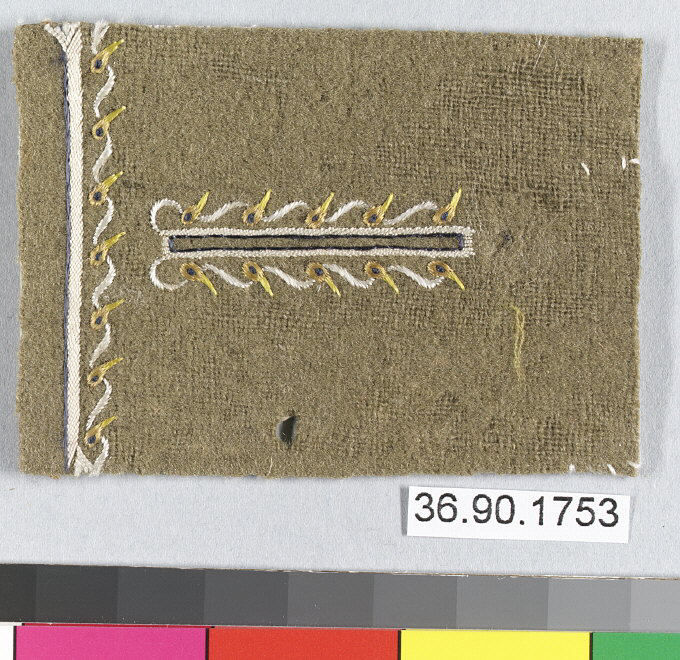
The intersection of materiality and silhouette in contemporary avant-garde couture demands a rigorous re-evaluation of garment architecture. For the SS26 season, Zoey Fashion Laboratory presents a singular specimen—a study in tension and release, crafted from silk on felt. This is not merely a garment; it is a proposition. It challenges the orthodoxy of draped femininity and the rigid utilitarianism of modernism, proposing instead a third path: a futuristic silhouette that breathes, deconstructs, and reconstructs itself in the wearer’s space. The sample, originating from the theoretical "Global Frontier," serves as a laboratory for these ambitions, where material science meets sculptural form.
Material Dialectics: Silk and Felt as Contradictory Allies
The choice of silk on felt is a deliberate act of conceptual friction. Silk, with its liquid, reflective surface, evokes the transient—a whisper of luxury, a memory of skin. Felt, by contrast, is the material of permanence, of industrial density and thermal memory. When these two are fused, they create a hybrid textile that is both soft and unyielding. The silk is not draped; it is tensioned across the felt substrate. The felt acts as a structural skeleton, absorbing the silk’s fluidity and transforming it into a series of cantilevered planes. This is a material dialogue of opposites: the ephemeral versus the durable, the luminous versus the matte. The result is a surface that shifts from matte opacity to high-gloss reflection as the wearer moves, creating a dynamic visual rhythm that is inherently futuristic. The felt’s ability to hold a crease without collapsing allows for sharp, architectural pleats that defy gravity, while the silk’s fragility introduces an element of risk—a reminder that innovation lives at the edge of failure.
Silhouette as Architecture: The Cantilevered Torso
The silhouette of this sample is a direct response to the Global Frontier’s ethos of boundary dissolution. Traditional couture relies on the body as a core, with fabric wrapping or flowing around it. Here, the silhouette is exoskeletal. The felt base is cut in a single, continuous spiral that wraps the torso from the left shoulder to the right hip, then extends outward in a cantilevered wing. This wing is not an appendage; it is an extension of the garment’s logic—a structural projection that redefines the wearer’s personal space. The silk overlay is laser-cut into a lattice pattern that exposes the felt beneath at specific stress points, creating a visual map of tension. This is not a silhouette of volume for volume’s sake; it is a silhouette of structural necessity. Each fold, each pleat, is a calculation of balance. The asymmetry is not decorative but functional, distributing the garment’s weight across the body’s natural pivot points. The result is a form that appears to be in a state of perpetual motion, even when static—a frozen moment of aerodynamic transformation.
Structural Innovation: The Tension Net and Negative Space
Innovation in avant-garde couture often lies in the unseen. For this SS26 study, the laboratory has pioneered a tension net system embedded within the felt substrate. Thin, surgical-grade steel cables are woven into the felt’s core, radiating from a central anchor point at the sternum. These cables are tensioned to specific pounds per square inch, creating a web that pulls the silk and felt into predetermined curves. This is not boning; it is dynamic structuring. The cables allow the garment to flex and return to its original shape, much like a composite material in aerospace design. The negative space created by the silk lattice is not empty; it is a field of interaction between the garment and the ambient air. This space allows for ventilation, movement, and a visual permeability that challenges the traditional closed form of couture. The structural innovation here is the integration of engineering precision with organic draping. The felt’s natural stiffness is amplified by the cables, creating a hybrid that is lighter than traditional corsetry but equally, if not more, supportive. This is a garment that learns from the body’s biomechanics, not just its aesthetics.
Futuristic Silhouette: The Post-Human Outline
The ultimate goal of this sample is to propose a post-human silhouette for SS26. The cantilevered wing and the tension net create a form that is not purely anthropomorphic. The shoulder line is exaggerated, extending 15 centimeters beyond the natural acromion, while the waist is cinched not by a belt but by the internal cable system. The hemline is asymmetrical, with the felt trailing into a sharp point at the back while the silk rises to a high front slit. This is a silhouette that references both the streamlined efficiency of mid-century modernism and the organic, alien forms of biophilic design. It is futuristic because it is improbable—it defies the easy categorization of "wearable" or "sculptural." The garment does not sit on the body; it hovers around it, creating a second skin that is both armor and veil. The silk’s reflective quality catches light in a way that mimics the surface of a liquid metal, while the felt’s matte finish grounds the form in a tactile reality. This is a silhouette that envisions a future where clothing is not a passive container but an active participant in the wearer’s kinetic expression.
Conclusion: A Blueprint for SS26 and Beyond
This sample from the Global Frontier is more than a standalone study; it is a manifesto for a new material logic. The silk-on-felt construction, the tension net, and the cantilevered silhouette converge to create a garment that operates on multiple registers: material, structural, and conceptual. For SS26, Zoey Fashion Laboratory positions this work as a challenge to the industry’s reliance on comfort and familiarity. The avant-garde must be uncomfortable, not in its wearability, but in its refusal to settle. This piece demands that we rethink the relationship between fabric and form, between the body and its extensions. It is a call to arms for designers to treat textiles as raw data, to be processed and engineered into new geometries. The Global Frontier is not a place; it is a method—a way of seeing the garment as a living system. This sample is its first, definitive expression.