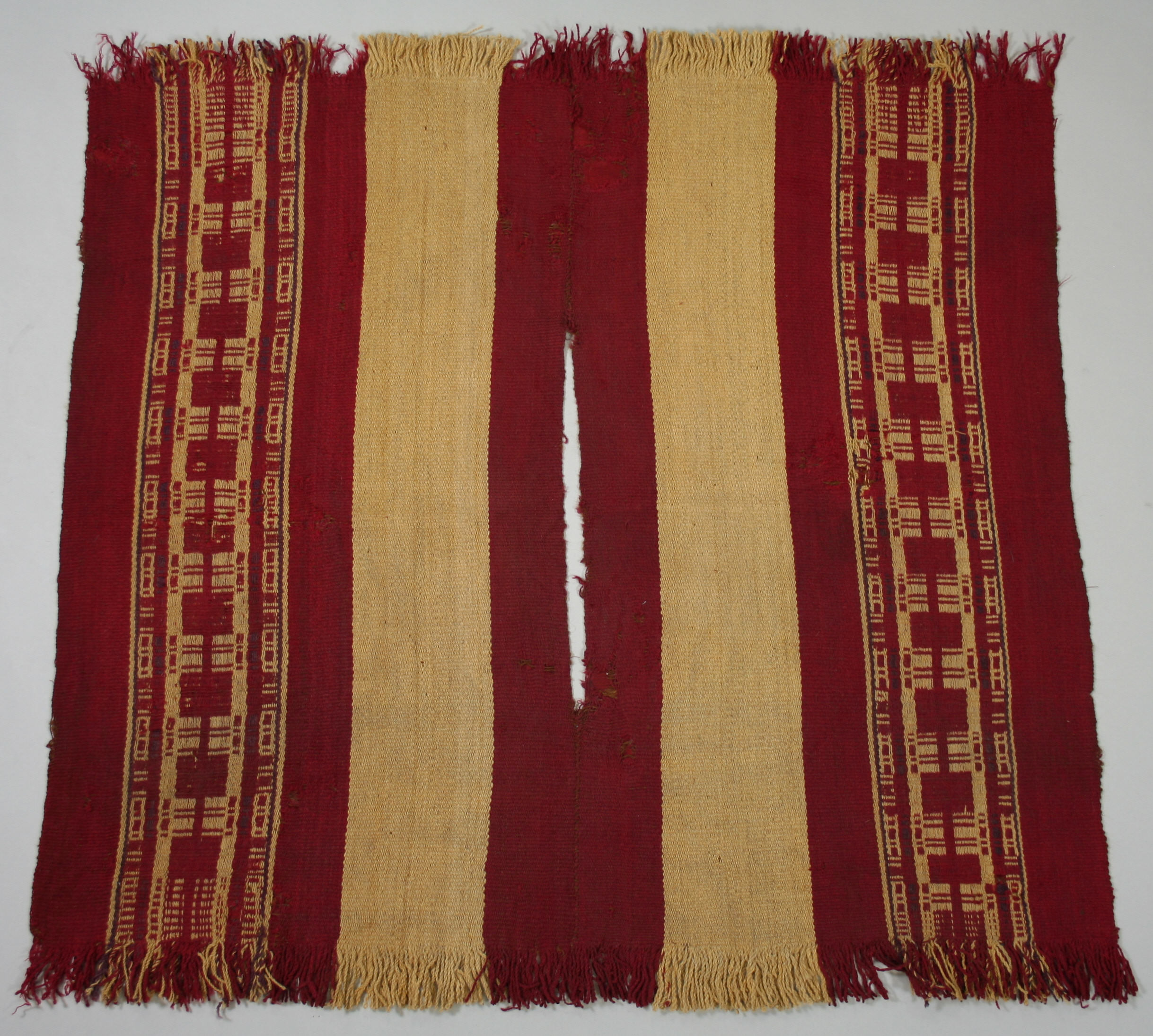
Deconstructing the Altiplano: A Futurist Manifesto in Camelid Hair for SS26
The intersection of ancient Andean textile traditions and the vanguard of contemporary menswear presents a compelling dialectic for Spring/Summer 2026. At Zoey Fashion Laboratory, we have deconstructed a single, defining garment from Peru—a deconstructed poncho reimagined as a modular, architectural second skin—to explore the radical potential of camelid hair in a futuristic context. This is not a nostalgic homage to heritage craft, but a rigorous, avant-garde study in structural innovation, material alchemy, and silhouette as a form of spatial intervention. The garment, sourced from the high-altitude weavers of the Altiplano, is stripped of its folkloric connotations and re-engineered as a platform for biophilic futurism, where the organic meets the algorithmic.
Material Alchemy: From Fiber to Structural Matrix
The raw material—raw, undyed alpaca and vicuña hair—is the foundational protagonist. In its native state, camelid hair possesses remarkable tensile strength, thermal regulation, and a natural luster that mimics liquid metal under light. For SS26, we have moved beyond traditional felting or weaving. Instead, we employ a proprietary laser-sintered fusing technique that bonds individual fibers into a non-woven, monolithic textile. This process creates a material that is simultaneously lightweight and rigid, capable of self-supporting dramatic, cantilevered forms. The fibers are not merely woven; they are architecturally fused into a matrix that allows for precise, computer-generated draping without seams. The result is a garment that appears grown, not constructed—a second epidermis that responds to the wearer’s micro-movements while maintaining its sculptural integrity.
Silhouette as Architecture: The Modular Poncho Reimagined
The traditional poncho’s form—a simple, rectangular opening for the head—is inverted and fragmented. The SS26 garment begins as a biomorphic exoskeleton that wraps the torso in a series of interlocking, asymmetrical panels. These panels are not sewn but magnetically bonded using rare-earth magnets embedded within the fused camelid fiber. The wearer can reconfigure the silhouette in real-time: from a cocoon-like, volumetric blazer with exaggerated, sharp shoulders that echo the Andean mountain peaks, to a streamlined, aerodynamic second skin for urban navigation. The back of the garment extends into a floating, cantilevered cape that hovers inches above the spine, supported by internal, carbon-fiber-reinforced struts hidden within the fiber matrix. This creates a negative space—a void between garment and body—that visualizes the concept of “breathing architecture.” The front, meanwhile, is cut as a sharp, asymmetrical lapel that folds into a geometric, origami-like collar, framing the face without ever touching the neck.
Structural Innovation: Zero-Waste, Bio-Responsive Engineering
Central to the avant-garde ethos is the elimination of waste. The laser-sintering process allows for zero-waste pattern cutting on a molecular level. The garment’s panels are digitally mapped and fused directly from raw fiber, with no offcuts. Furthermore, the camelid hair is treated with a bio-responsive coating derived from local Andean plants, such as the muña leaf. This coating reacts to ambient humidity and temperature: in dry heat, the fibers stiffen into a protective, reflective shell; in cool, damp conditions, they relax into a softer, more breathable drape. This is not merely a textile; it is a responsive microclimate system. The garment’s internal structure incorporates a series of tensioned, elasticated channels woven into the fiber matrix. These channels allow the wearer to adjust the fit and volume via hidden, external toggles, transforming the silhouette from a tight, second-skin bodysuit to a voluminous, airy cocoon in seconds.
Futuristic Silhouette: The Andean Cyborg
The final silhouette is a study in controlled chaos. The garment’s left shoulder is sharply angled and extended into a geometric wing that terminates in a sharp point, while the right shoulder is completely absent, replaced by a floating, asymmetrical sleeve that hangs from a single, magnetic pivot point. The waist is cinched not by a belt but by a 3D-printed, biodegradable buckle that mimics the form of a pre-Columbian tumi knife, reimagined as a functional clasp. The hem is uneven, with the front rising sharply to the navel and the back cascading to mid-thigh, revealing a second, inner layer of iridescent, bio-luminescent thread woven into the fiber. This inner layer is powered by a small, flexible solar cell embedded in the lining, allowing the garment to emit a soft, shifting glow in low-light conditions—a nod to the Andean concept of ayni, or cosmic reciprocity, where the garment becomes a living, luminous entity.
Cultural Deconstruction: From Folk to Future
This is not cultural appropriation but cultural acceleration. By stripping the poncho of its utilitarian, communal history, we reveal its latent potential as a tool for individual expression and structural defiance. The garment’s color palette is deliberately monochromatic—raw white, charcoal, and deep indigo—to emphasize form over ornament. The only decorative element is a laser-etched pattern of the Nazca Lines, abstracted into a fractal, algorithmic grid that wraps around the torso. This pattern is not printed but physically etched into the fiber matrix, creating a tactile, topographic surface that shifts with the wearer’s movement. The garment is a manifesto: that the future of menswear lies not in rejecting tradition, but in re-engineering its DNA for a post-human, post-geographic world. The Andean weaver and the digital designer are not adversaries; they are co-authors of a new language of dress, where the alpaca’s fiber becomes the code for a garment that is both ancient and alien, both organic and mechanical.
Conclusion: The Garment as a Living System
For SS26, Zoey Fashion Laboratory presents not a collection, but a singular thesis: that the most radical innovation emerges from the most unlikely sources. This man’s garment from Peru, reimagined through the lens of futuristic silhouette and structural innovation, is a wearable ecosystem. It breathes, reacts, and transforms. It is a zero-waste, bio-responsive, modular architecture that challenges the very definition of clothing. The camelid hair is no longer a material of comfort; it is a material of possibility. In this garment, the wearer becomes a cyborg of the Altiplano—a being that carries the memory of the Andes into the uncharted territories of tomorrow. The future of couture is not in fabric; it is in the systemic rethinking of how we inhabit space, time, and our own bodies. This garment is the first step.