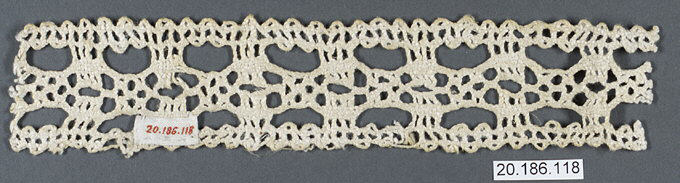
The Architecture of Insertion: Deconstructing the Global Frontier Through Bobbin Lace
The avant-garde imperative for SS26 is not merely to clothe the body, but to redefine its spatial and temporal boundaries. Zoey Fashion Laboratory’s latest investigation, “Insertion,” confronts this challenge with a radical thesis: that the garment is a site of perpetual intervention, a membrane where material, silhouette, and origin converge in a state of deliberate tension. Drawing from the Global Frontier—a conceptual territory of shifting geopolitical and digital borders—the collection deploys bobbin lace, a craft historically synonymous with domesticity and heritage, as the primary medium for structural innovation. This is not a nostalgic revival; it is a systematic deconstruction of lace’s perceived fragility, transforming it into an agent of architectural defiance.
The Bobbin Lace Paradox: From Delicate Mesh to Load-Bearing Membrane
Bobbin lace, with its intricate network of twisted and woven threads, traditionally evokes the hand of the artisan and the slow rhythm of pre-industrial time. In the context of “Insertion,” however, this material is subjected to a radical material recalibration. The lace is no longer a decorative overlay; it is engineered as a structural exoskeleton. By reinforcing the thread with microfilament carbon fibers and applying a heat-set resin, the laboratory transforms the lace’s openwork into a load-bearing matrix. The negative spaces—the voids between the braided patterns—become as critical as the threads themselves. These voids are not empty; they are insertion points for light, for air, and for the wearer’s own kinetic energy.
This re-engineering allows for silhouettes that defy gravity. A jacket’s shoulder, for instance, is not padded but constructed from a single, cantilevered sheet of bobbin lace, its pattern radiating outward like a fractured geodesic dome. The insertion of rigid elements—thin, laser-cut aluminum rods—into the lace’s weave creates articulated joints, permitting the garment to shift from a static sculpture to a dynamic exoskeleton. The result is a silhouette that is simultaneously organic and mechanical, a hybrid of the hand-knotted and the machine-precise.
Silhouette as Insertion: The Body as a Contested Territory
The Global Frontier theme manifests most powerfully in the collection’s approach to silhouette. Traditional couture silhouettes—the hourglass, the A-line, the column—are treated as obsolete templates. Instead, “Insertion” proposes a fragmented, modular silhouette that suggests the body is a landscape of overlapping territories. Garments are constructed from multiple, independent panels of bobbin lace, each anchored to a central spine or harness. These panels can be adjusted, detached, or re-inserted, allowing the wearer to modulate their form in real time.
Consider a floor-length skirt that appears, at first glance, to be a single, flowing piece. Upon closer inspection, it is composed of seven discrete lace panels, each with a distinct pattern—a geometric lattice, a floral motif, a biomorphic swirl—that represent different cultural cartographies. The insertion of these panels is not seamless; they overlap and gap, creating deliberate apertures that expose the body beneath. This is not a garment of concealment but of strategic revelation, where the skin becomes a border zone between the self and the frontier. The silhouette is asymmetrical, with one side heavily layered and the other almost bare, evoking the uneven distribution of power and resources across global borders.
Structural Innovation: The Lace as a Living System
The laboratory’s most daring innovation lies in the integration of responsive technology into the lace itself. Micro-sensors, woven into the thread matrix, detect changes in temperature, humidity, and the wearer’s movement. When the body generates heat, the lace’s structure contracts, tightening the weave and creating a denser, more insulating barrier. Conversely, in cooler conditions or during stillness, the lace relaxes, opening its pores to allow airflow. This dynamic insertion of biofeedback transforms the garment from a passive shell into a living system, a second skin that negotiates its environment.
The structural innovation extends to the garment’s closure system. Traditional zippers and buttons are replaced by magnetic insertion points—small, embedded neodymium magnets that allow panels to snap together with precision. This system enables rapid assembly and disassembly, echoing the transient, modular nature of frontier life. A cape, for example, can be reconfigured into a sculptural hood or a waist-cinching belt within seconds. The magnets are not hidden; they are exposed, their metallic gleam contrasting with the lace’s organic texture, emphasizing the insertion of industrial logic into artisanal craft.
Deconstructive Aesthetics: The Unfinished as a Statement
In keeping with the avant-garde tradition, “Insertion” celebrates the unfinished and the provisional. Raw edges are left unhemmed, threads are deliberately frayed, and patterns are intentionally disrupted. This is not carelessness but a philosophical stance: the frontier is a place of constant construction and deconstruction. One look features a bodice where the bobbin lace pattern dissolves into a chaotic tangle of loose threads at the hip, as if the garment is in the process of being unraveled by an unseen force. This deconstructive insertion challenges the viewer to question the very notion of a finished garment. Is a garment ever complete, or is it always a work in progress, subject to the interventions of time, wear, and the wearer’s agency?
The color palette reinforces this ethos. The primary hue is a stark, unbleached white—the color of raw linen and unprimed canvas—punctuated by insertions of high-visibility orange and electric blue. These accent colors are not applied uniformly but are woven into the lace in erratic, code-like sequences, evoking digital data streams or territorial markers on a map. The effect is jarring yet cohesive, a visual representation of the collision between the analog and the digital, the organic and the synthetic.
Conclusion: The Garment as a Frontier of Possibility
Zoey Fashion Laboratory’s “Insertion” is not a collection for passive consumption. It demands active engagement, a willingness to see the garment as a site of perpetual negotiation. By reimagining bobbin lace as a structural, responsive, and modular material, the laboratory has created a vocabulary for futuristic silhouettes that are as much about process as they are about form. The Global Frontier is not a destination; it is a condition of constant insertion—of memory into matter, of technology into tradition, of the body into the world. In this collection, the garment becomes a manifesto, a living document that writes and rewrites itself with every wear. The avant-garde future is not seamless; it is a lacework of deliberate gaps, waiting to be filled.