Deconstructing the Vessel: Paracas Ceramic as a Blueprint for SS26 Avant-Garde Couture
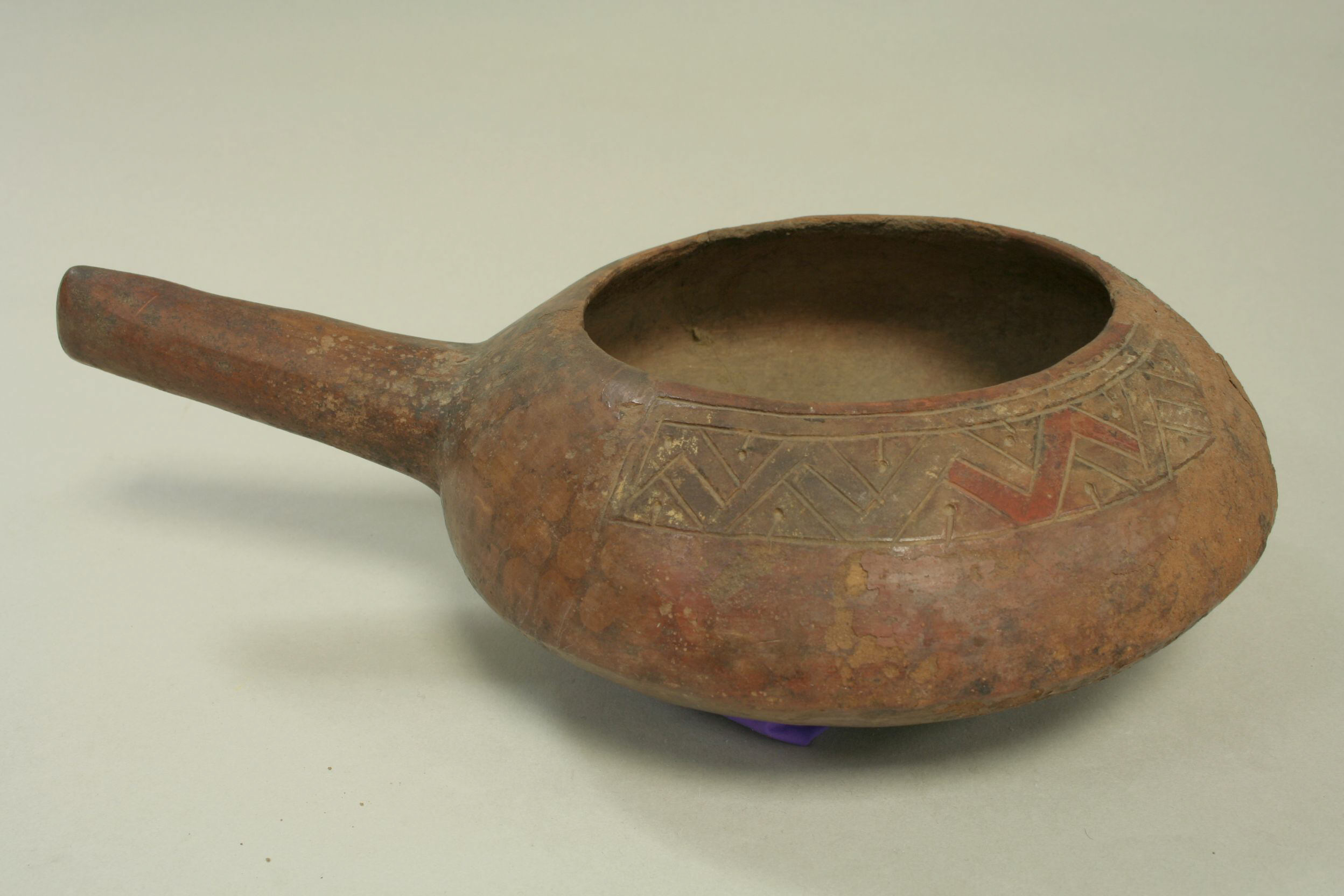
The intersection of ancient artisanry and futuristic fashion design offers a fertile ground for radical innovation. At Zoey Fashion Laboratory, we reject the linear trajectory of fashion history, instead embracing a cyclical dialogue where primordial forms inform the most advanced structural propositions. The Paracas ceramic vessel, with its handle, is not merely an archaeological artifact; it is a manifesto of volume, void, and tensile strength. This analysis deconstructs the vessel’s core principles—its biomorphic silhouette, its handle as a load-bearing appendage, and its pigmented surface—to architect a collection for SS26 that redefines the relationship between the body, garment, and space. We propose a new sartorial language rooted in futuristic silhouettes and structural innovation, where the wearer becomes both the vessel and the vessel’s content.
I. The Silhouette as Containment: Reimagining the Vessel Form
The Paracas vessel’s primary function is containment, yet its form is far from static. Its bulbous, often asymmetrical body—a swelling volume that tapers to a narrow base—suggests a dynamic equilibrium between expansion and compression. For SS26, we translate this into a series of architectural garments that use negative space as a design element. The silhouette is not a simple A-line or hourglass; it is a deconstructed oval. Imagine a coat constructed from three-dimensional, ceramic-like panels that flare outward from the waist, creating a bell jar effect, only to be cinched at the ankles by a rigid, molded band. This is the vessel’s belly turned wearable. The shoulders are not padded but hollowed out, like the vessel’s interior, creating a void that frames the neck and arms. The garment’s volume is not draped but cast—using micro-molded, recycled polymer composites that mimic the weight and texture of Paracas ceramic, yet are impossibly light. The narrow base of the vessel becomes a peplum-like structure that flares from the hip, but it is not fabric; it is a series of interlocking, handle-like ribs that allow for movement while maintaining the silhouette’s integrity. This is not a dress; it is a portable vessel that the body inhabits, a futuristic cocoon that blurs the line between garment and architecture.
II. The Handle as Structural Appendage: From Utility to Ornament
The handle of the Paracas vessel is a masterclass in ergonomic engineering. It is not an afterthought; it is a load-bearing member that extends from the body, often at a precise angle to counterbalance the vessel’s weight. In our SS26 collection, the handle is elevated from utilitarian grip to a primary design motif that redefines the garment’s relationship with the wearer’s body. We propose handles not as accessories, but as integral structural elements that replace traditional seams and closures. Consider a bodice where a single, oversized handle arcs from the right shoulder, wrapping around the torso and terminating at the left hip. This handle is not sewn; it is 3D-printed from a ceramic-infused bioplastic, its surface polished to a high gloss, mimicking the ancient pigment. It serves as both a visual anchor and a functional strap, allowing the garment to be worn asymmetrically. Alternatively, a skirt might feature multiple handles—small, finger-sized loops—that are woven into the garment’s matrix. These handles are not for carrying; they are interactive points that allow the wearer to adjust the garment’s volume, pulling the fabric taut to create a new silhouette, or leaving it loose for a more organic drape. The handle becomes a kinetic joint, a point of articulation that transforms the garment from static form to dynamic sculpture. This is futuristic ornamentation rooted in ancient logic: every handle is a promise of function, a declaration of strength, and a nod to the vessel’s original purpose of being held, carried, and poured.
III. Pigment and Surface: The Ceramic Skin as Narrative
The Paracas vessel’s surface is a canvas of ritual and symbolism, its pigments—ochre, cobalt, black—applied with precision to create geometric and anthropomorphic patterns. In our avant-garde context, the garment’s surface is not fabric; it is a second skin that is treated as a ceramic glaze. We reject traditional dyeing in favor of digital ceramic printing and thermoformed polymer coatings. The garment’s “skin” is a composite of recycled nylon and micro-ceramic particles, which is then heated and molded into shape. The pigmentation is not printed on top; it is embedded within the material, creating a permanent, color-saturated surface that will never fade. The Paracas motifs—stepped pyramids, stylized felines, abstract waves—are reimagined as parametric patterns that flow across the garment’s volume. But unlike the ancient vessel, these patterns are not static. Using thermochromic pigments, the garment’s surface shifts color in response to body heat and ambient light. A dress that appears solid black in a cool gallery will, upon the wearer’s movement, reveal hidden geometric grids in deep cobalt and burnt sienna. The surface becomes a living document, a narrative that changes with each gesture. The vessel’s original pigment was a record of its culture; our SS26 pigment is a record of the wearer’s presence. The ceramic skin is not just decorative; it is a structural membrane that holds the garment together, eliminating the need for internal linings or boning. The garment is a shell, a seamless, self-supporting form that echoes the vessel’s integrity.
IV. Structural Innovation: The Garment as Load-Bearing Architecture
The Paracas vessel’s genius lies in its ability to withstand the stresses of handling and pouring while maintaining its delicate form. For SS26, we apply this principle of load-bearing elegance to garment construction. Traditional tailoring relies on seams, darts, and internal structures to support the garment’s weight. Our approach is monolithic. We use generative design algorithms to create garments that are structurally optimized, with material thickness varying according to stress points. The handle, the neckline, and the hem are thickened and reinforced, while the body of the garment is thinned to a near-translucent veil. This is not a dress; it is a cantilevered form. A jacket might have no back seam, instead being formed from a single, continuous sheet of ceramic-composite material that is folded and fused at the shoulders. The sleeves are not attached; they are extensions of the body, molded as integral hollows within the garment’s mass. The closure is not a zipper but a magnetic seam that aligns with the vessel’s handle axis, creating a clean, uninterrupted surface. The innovation is not in the material alone but in the system of assembly. Each garment is a kit of interlocking, handle-like parts that can be disassembled and reconfigured, much like the vessel’s form can be reimagined. This is circular design at its most avant-garde: a garment that can be a dress today, a cape tomorrow, and a sculptural object the day after. The vessel’s handle, once a simple tool, is now the key to a new, futuristic architecture of the body.
Conclusion: The Vessel as a Manifesto for SS26
The Paracas ceramic vessel, with its handle, is not a relic to be imitated but a structural philosophy to be extrapolated. For SS26, Zoey Fashion Laboratory proposes a collection where the garment is not draped but cast, where the handle is not an accessory but a load-bearing joint, and where the surface is not a print but a living ceramic skin. This is a definitive break from the fabric-centric traditions of fashion. We are not making clothes; we are constructing vessels for the human form. The future of couture lies in the synthesis of ancient structural wisdom and cutting-edge material science. The Paracas vessel teaches us that form and function are not separate, but a single, continuous loop—a handle for the hand, a belly for the body, a pigment for the soul. Our SS26 collection will be a futuristic archaeology, a re-excavation of the past to forge the next millennium of fashion. The garment is the vessel; the wearer is the ritual. This is the definitive avant-garde study for a new era.