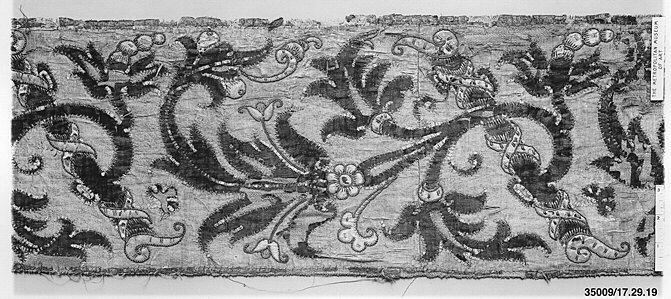
The Velvet Dissection: Deconstructing the Strip for SS26
In the relentless pursuit of the new, the avant-garde designer must often return to the primitive—the raw, the elemental. For SS26, Zoey Fashion Laboratory re-examines the most fundamental of architectural gestures: the strip. Not as a mere remnant, but as a primary structural agent. The chosen medium, velvet, traditionally synonymous with decadence, weight, and historical opulence, is systematically deconstructed and re-architected into a vocabulary of futuristic austerity. This is not a study in comfort, but a manifesto on tension, exposure, and the kinetic potential of fabric. The strip, in this context, becomes a line of force—a boundary that both defines and negates the body.
The Strip as Structural Line: From Surface to Skeleton
The conventional garment relies on the continuous plane of fabric to create volume. Zoey’s SS26 collection inverts this logic. Here, the velvet is not draped; it is fragmented. The strip is the unit of construction. Imagine a bodice that does not cover, but rather cages the torso with parallel, tensioned bands of crushed velvet. These strips are not sewn to a lining; they are suspended from a carbon-fiber exoskeleton, a hidden architectural frame that holds them at precise distances from the skin. The result is a silhouette that is simultaneously exposed and armored. The velvet’s pile catches light differently on each strip, creating a moiré effect of shifting shadows—a visual topography of the body’s movement.
This approach eradicates the traditional notion of a garment’s “inside” and “outside.” The strip’s edge becomes the primary aesthetic feature. Raw, laser-cut edges of velvet are left unhemmed, their frayed fibers a deliberate counterpoint to the material’s inherent richness. In a floor-length gown, the skirt is composed of hundreds of individually suspended velvet strips, each cut on the bias to allow for a liquid, serpentine movement. The silhouette is not a cone or a bell; it is a cascade of vertical lines, a waterfall of material that breaks the body’s contour into a sequence of dynamic, oscillating vectors.
Material Dialectics: The Velvet Paradox
Velvet’s traditional identity is one of softness, absorption, and intimacy. To use it as a rigid, structural element is a deliberate act of material subversion. The SS26 collection exploits this paradox. The velvet is not merely a surface; it is a structural membrane. Through a process of resin-infusion and thermal bonding, select strips are hardened into semi-rigid architectural panels. These hardened strips are then juxtaposed with their fluid counterparts. A jacket, for instance, might feature a back panel composed of vertical, rigid strips that hold a sharp, blade-like silhouette, while the front panels dissolve into soft, flowing velvet strips that drape asymmetrically across the torso.
This duality creates a tension between the organic and the synthetic. The velvet’s pile, when compressed by the resin, loses its plushness, becoming a glossy, almost lacquered surface. This glossy strip, when placed next to a raw, unmodified velvet strip, creates a dialogue between the historical (the plush, the royal) and the futuristic (the hard, the engineered). The color palette for SS26 is stark: anthracite black, oxidized silver, and a single, shocking vein of arterial crimson. The crimson is used exclusively on the inner-facing strips of a deconstructed coat, visible only when the wearer moves—a secret, violent blush against the monochrome exterior.
Silhouette and Space: The Negative Volume
The most radical innovation of the strip-based construction is the manipulation of negative space. By removing fabric, we create volume. A traditional ball gown uses mass to define shape; Zoey’s SS26 uses absence. A skirt, for example, is not a solid cone but a lattice of velvet strips, spiraling from the waist to the floor. The gaps between the strips are as important as the strips themselves. They create a visual permeability, allowing the observer to see the body in fragments, to perceive the space that the garment does not occupy.
This is a silhouette that breathes. It is not static. When the model walks, the strips part and close, revealing and concealing the leg in a rhythm of exposure. The futuristic silhouette here is not one of rigid geometry (the sphere, the cube) but of dynamic, chaotic order. The strips can be programmed to move in specific patterns via micro-servos embedded in the structural frame—a subtle, almost imperceptible flutter that mimics the respiration of a living organism. The shoulder line, traditionally a locus of power, is dissolved into a series of independent, floating velvet strips that hover around the clavicle, creating a halo of material that is both protective and ephemeral.
Construction as Performance: The Deconstructive Process
The final layer of analysis is the process itself. The strip is not a finished component; it is a record of its own making. The edges of the velvet are left raw to show the cut, the precision of the laser, the hand of the artisan who tensioned each strip. This is a deconstructive aesthetic in the purest sense: the garment announces its own construction. The seams are not hidden; they are celebrated as the points of connection between strips, often reinforced with exposed metal grommets or micro-chains.
For SS26, Zoey Fashion Laboratory proposes a new definition of luxury: not in the abundance of material, but in the precision of its absence. The velvet strip, in its isolated, tensioned state, becomes a line of inquiry—a question about the nature of covering, the politics of exposure, and the future of the human form as a site for architectural intervention. This is not a collection for the passive observer. It demands a new kind of gaze—one that sees the space between the strips as the true canvas, and the body as the primary structural element. The future of couture, this analysis suggests, lies not in draping the body, but in framing it with lines of force, with velvet edges that cut through time and space.