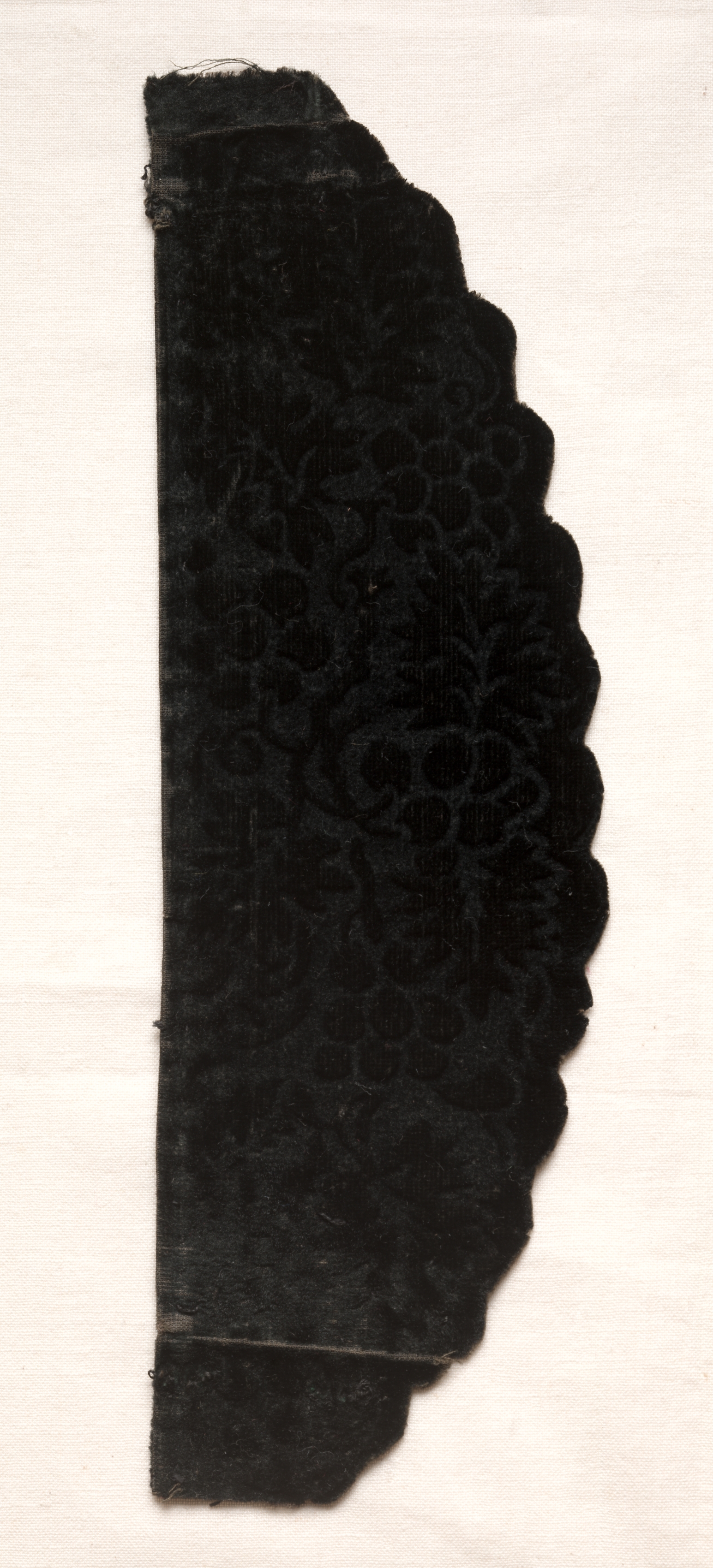
Technical Deconstruction: Velvet Cuffs
Material Origin & Historical Context: The subject, velvet cuffs, originates from 19th-century France, a period defined by sartorial opulence, rigid social codes, and, crucially, the dawn of industrial textile production. Velvet, historically a symbol of nobility due to the labor-intensive hand-weaving process, became more accessible through mechanization. However, its application on cuffs is particularly significant. The cuff is a point of interaction, of gesture, and of wear. In the 19th century, detachable linen or cotton cuffs protected expensive sleeves from soiling. The deliberate use of velvet here subverts that practicality, transforming a protective element into a purely decorative, status-driven one. It speaks to a performative luxury, where the wearer is so removed from manual labor that even their points of contact with the world are sheathed in plush, delicate fabric.
Molecular Blueprint: The "New DNA Strand" Reference
The directive to reference a "New DNA Strand" is not metaphorical but a core technical instruction. We must move beyond velvet as a mere textile and analyze its intrinsic, structural code.
Traditional Velvet DNA: The genome of traditional velvet is composed of a primary base fabric (warp and weft) and a secondary set of warp threads that form loops, which are then cut to create the characteristic dense, upright pile. This pile, with its light-absorbing and light-reflecting properties, creates depth, richness, and a directional nap. Its historical expression is one of monolithic luxury—a continuous, unbroken field of texture.
Proposed New Genetic Sequence: For Zoey Fashion Lab's avant-garde expression, we must splice this DNA. Imagine the velvet pile not as a uniform field, but as a programmable, variable expression. The new strand incorporates:
1. Binary Pile Logic: The pile height is no longer consistent. Using advanced tufting and laser-cutting techniques, we can code areas of high pile (deep, shadowed) and low or shaved pile (flat, reflective) to create a binary, pixelated texture directly within the velvet's structure. This turns the fabric into a data field.
2. Chimeric Fiber Integration: The weft of the base fabric is hybridized. Instead of pure silk or cotton, we integrate a monofilament optical fiber or a conductive, shape-memory alloy thread at precise intervals. This alters the fundamental behavior of the cuff—its interaction with light, electricity, and form.
3. Directional Nap Sequencing: The nap direction is sequenced in deliberate, contrasting patches rather than flowing uniformly. This creates optical friction, where light does not glide but stutters across the surface, generating a moiré or interference pattern effect from the garment's own movement.
Avant-Garde Reconstruction: From Historical Relic to Future Interface
The avant-garde style mandate requires us to use this new velvet DNA not for nostalgia, but as a probe into future forms of wearability and communication. The cuff ceases to be trim and becomes a primary interface.
Manifestation 1: The Luminescent Gesture Cuff
Utilizing the chimeric fiber-integrated velvet, the cuff becomes a low-level illumination device. The conductive threads, powered by a negligible micro-cell embedded in a button, cause the optical fibers to emit a soft glow. The binary pile logic is key here: the design is not printed *on* the velvet but is the velvet itself. The shaved, low-pile areas allow brighter light transmission, while the high-pile areas diffuse and dim it. The cuff illuminates not statically, but in response to gesture—a flick of the wrist intensifies the glow via an accelerometer. It transforms 19th-century decorative gesture into 21st-century data-rich signaling.
Manifestation 2: The Responsive Barrier Cuff
This iteration explores the cuff's original protective function through a futuristic lens. The shape-memory alloy within the velvet's new DNA allows the cuff to alter its physical state. At rest, it is the classic, plush velvet band. Upon sensing a specific environmental trigger—such as a change in atmospheric pressure, proximity to a screened device, or a specific gesture—the alloy contracts. This contraction causes the velvet to tighten minimally and the pile to physically reorient, creating a stiffer, more defensive-looking barrier. The surface texture actively changes from soft invitation to tactile warning. It is a garment that responds to digital and physical environments.
Manifestation 3: The Data-Weave Cuff
Here, the velvet is the storage medium. The sequenced nap direction, readable by a specialized laser scanner (much like a QR code), holds information. Each cuff in a collection contains a unique code woven into its very texture—a poem, a cryptographic key, a link to a digital asset. The wearer carries data not on a device, but on their sleeve. The act of "reading" the cuff requires intimate proximity and specific technology, creating a new ritual of access and exclusivity, echoing the social exclusivity of 19th-century velvet itself, but transposed into the realm of information.
Conclusion: The Cuff as Critical Platform
For Zoey Fashion Lab, the 19th-century French velvet cuff is not a relic to be reproduced, but a genetic sample to be sequenced and edited. By deconstructing its material history—its role as a decorative protector for the privileged—and rebuilding it with a new DNA strand featuring binary pile, chimeric fibers, and sequenced nap, we transform it into a platform for avant-garde inquiry.
These proposed manifestations position the cuff as an interactive interface for light, a responsive environmental barrier, and a physical data repository. They challenge the passive nature of historical trim, injecting it with agency and interactivity. The resulting garments interrogate the evolving relationships between body and technology, decoration and function, secrecy and display. The plush, historical tactility of velvet remains, but it now serves a coded, dynamic, and deeply contemporary purpose. The analysis confirms that by rewriting the fundamental code of a historical element, we can author the future syntax of fashion.