Deconstructing the Sacred: A Coptic Tapestry as Proto-Avant-Garde Blueprint for SS26
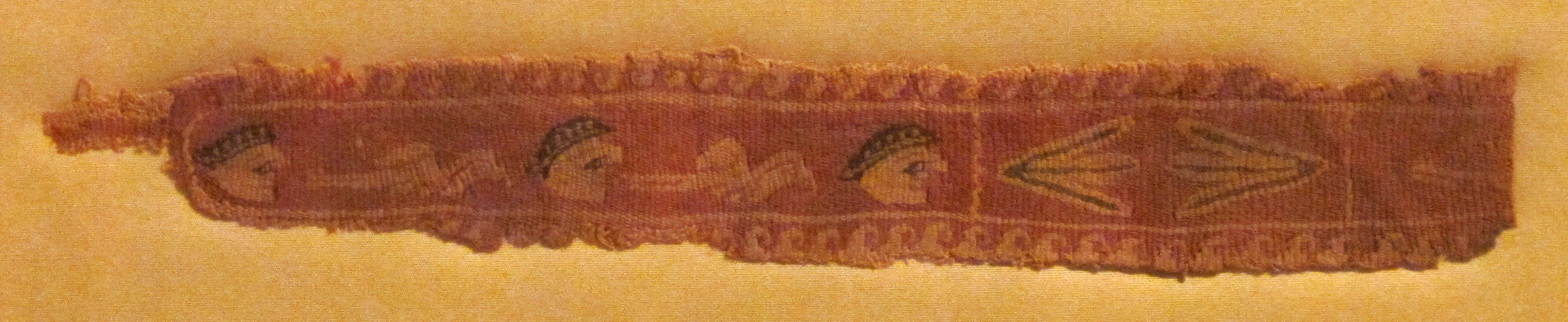
The Zoey Fashion Laboratory presents a rigorous deconstruction of a 4th–7th century Coptic band fragment, a relic of funerary or liturgical adornment, as a radical blueprint for Spring/Summer 2026. This fragment—a tapestry weave of polychrome wool and undyed linen depicting masks, lotus flowers, and birds—is not an artifact of heritage but a manifesto of structural defiance. Its motifs, once symbols of resurrection and eternal life, become here the grammar for a futuristic silhouette that interrogates the boundaries between garment, architecture, and ritual. The weave’s inherent tension between warp and weft mirrors the dialectic of preservation and disruption that defines avant-garde couture. This analysis isolates three core elements—the mask, the lotus, and the bird—and translates them into a lexicon of structural innovation, where fabric becomes a living, breathing membrane.
The Mask as Structural Armature: Deconstructing Identity and Support
The Coptic mask, often a stylized human face or Gorgoneion, is not merely decorative but a protective talisman. In the band fragment, its placement within a repeating geometric framework suggests a ritualized containment of the self. For SS26, the mask is reimagined as a structural armature—a rigid, sculptural element that disrupts the soft, flowing silhouette. The traditional tapestry weave’s dense, interlocking threads become a metaphor for this armature: a matrix of tension and release. The polychrome wool, with its deep indigos, ochres, and madder reds, is translated into a high-performance textile—a bonded, laser-cut wool that mimics the weight and gravity of the original weave while allowing for articulation. The mask motif is extracted from its flat plane and projected into three-dimensional space as a wearable exoskeleton. The jawline of the mask becomes a cantilevered shoulder piece, its eye sockets transformed into negative-space cutouts that reveal the skin beneath. The linen ground, undyed and raw, is used as a soft underlayer, its organic texture contrasting with the mask’s polished, architectural precision. This is not a costume but a deconstruction of identity: the mask does not hide the wearer but exposes the structural logic of the garment itself. The silhouette is sharp, angular, and deliberately unbalanced—a shoulder that juts forward like a broken pediment, a hip that flares asymmetrically, echoing the fragment’s irregular edges.
The Lotus as Organic Architecture: From Flat Motif to Living Silhouette
The lotus, a symbol of spiritual rebirth and purity in Coptic art, is typically rendered as a stylized, symmetrical flower. In the band fragment, it appears in a repeating pattern, its petals interlocking with the birds and masks. For SS26, the lotus is reimagined as a transformative, organic architecture—a silhouette that breathes and shifts with the wearer’s movement. The tapestry’s polychrome palette—specifically the lotus’s golden yellows and greens—is translated into a chromatic gradient woven into a double-faced silk organza. This fabric is then manipulated using smocking and pleating techniques that echo the lotus’s petal structure. The lotus is not merely printed or embroidered; it becomes a three-dimensional, kinetic element. A skirt, for example, is constructed from multiple layers of this organza, each layer laser-cut into a lotus petal shape and heat-set to curve inward, creating a silhouette that resembles a blooming flower in reverse—a deconstructed, inverted bloom. The waistline is defined by a wide, sculpted belt that mimics the lotus’s central stamen, using a rigid, 3D-printed polymer infused with crushed linen for texture. The silhouette is voluminous but controlled, like a flower opening and closing with each step. The birds, often depicted perched on lotus stems, are reimagined as structural seams and darts that trace the body’s contours, their wings becoming pleats that flare from the shoulder to the wrist, creating a dynamic, aerodynamic line. The result is a garment that is simultaneously architectural and organic, where the lotus is not a motif but a governing principle of form.
The Bird as Kinetic Drape: Flight and Fragmentation in Motion
Birds in Coptic textiles—often doves or falcons—symbolize the soul’s ascent and divine messenger. In the band fragment, they are rendered in a stylized, repetitive pattern, their wings spread in a frozen, symbolic flight. For SS26, the bird is deconstructed into a kinetic drape system that challenges the static nature of traditional couture. The tapestry’s dense, woven structure is reversed: the bird’s body becomes a floating, detached panel that moves independently from the garment’s core. This is achieved through a technique of unraveling and re-weaving the original tapestry’s logic. A jacket, for instance, features a back panel that is entirely detached from the shoulders, suspended by a series of fine, adjustable cables made from recycled fishing net—a nod to the linen’s natural fiber origins. The panel is woven in a jacquard that replicates the bird’s feathers in a gradient of undyed linen and dyed wool, creating a tactile, shifting surface. The bird’s beak and eye are abstracted into metal grommets and eyelets that serve as attachment points, allowing the wearer to adjust the drape’s tension. The silhouette is radically asymmetrical: one sleeve is full and flowing, mimicking a bird’s wing in mid-flap; the other is fitted and architectural, like a folded wing. The hemline is uneven, with strips of wool and linen trailing like tail feathers. The mask and lotus motifs reappear as embedded, laser-cut appliqués on the drape, their colors bleeding into the bird’s form through a process of digital dye sublimation. This is not a literal representation of flight but a structural exploration of fragmentation and release—a garment that is in a constant state of becoming, its silhouette shifting with the wearer’s body language.
Structural Innovation: The Tapestry as a Living Membrane
The overarching structural innovation for SS26 is the reinterpretation of the tapestry weave itself as a living membrane. The Coptic band fragment’s construction—a warp of undyed linen and a weft of polychrome wool—creates a surface that is both rigid (the linen) and soft (the wool). This duality is exploited in a new textile: a bi-component, heat-reactive fabric that stiffens or softens based on body heat. The linen warp is replaced with a biodegradable, thermoplastic polymer that can be molded into structural shapes—like the mask armature or the lotus petals—while the wool weft remains organic, allowing for drape and movement. The motifs are not woven but embedded through a process of laser sintering, where the wool fibers are fused into the polymer base, creating a seamless, monolithic surface. The silhouette for SS26 is defined by this interplay of hard and soft: a bodice that is rigid and sculptural on one side, soft and flowing on the other. The hemline is a series of fractured, geometric panels that mimic the fragment’s irregular edges, each panel a different length and color, referencing the polychrome palette. The birds, masks, and lotus flowers are not repeated but singular, oversized elements that act as structural anchors—a lotus that blooms from the hip, a bird that forms the entire back panel, a mask that is the front closure. The result is a collection that is both a homage to the Coptic weaver’s craft and a radical departure, a dialogue between textile history and futuristic fashion. The garments are not meant to be static but to evolve with the wearer, the tapestry’s sacred geometry becoming a blueprint for a new, deconstructed body—a body that is both armor and sanctuary, flight and root.