Introduction: The Rapier as a Deconstructive Archetype
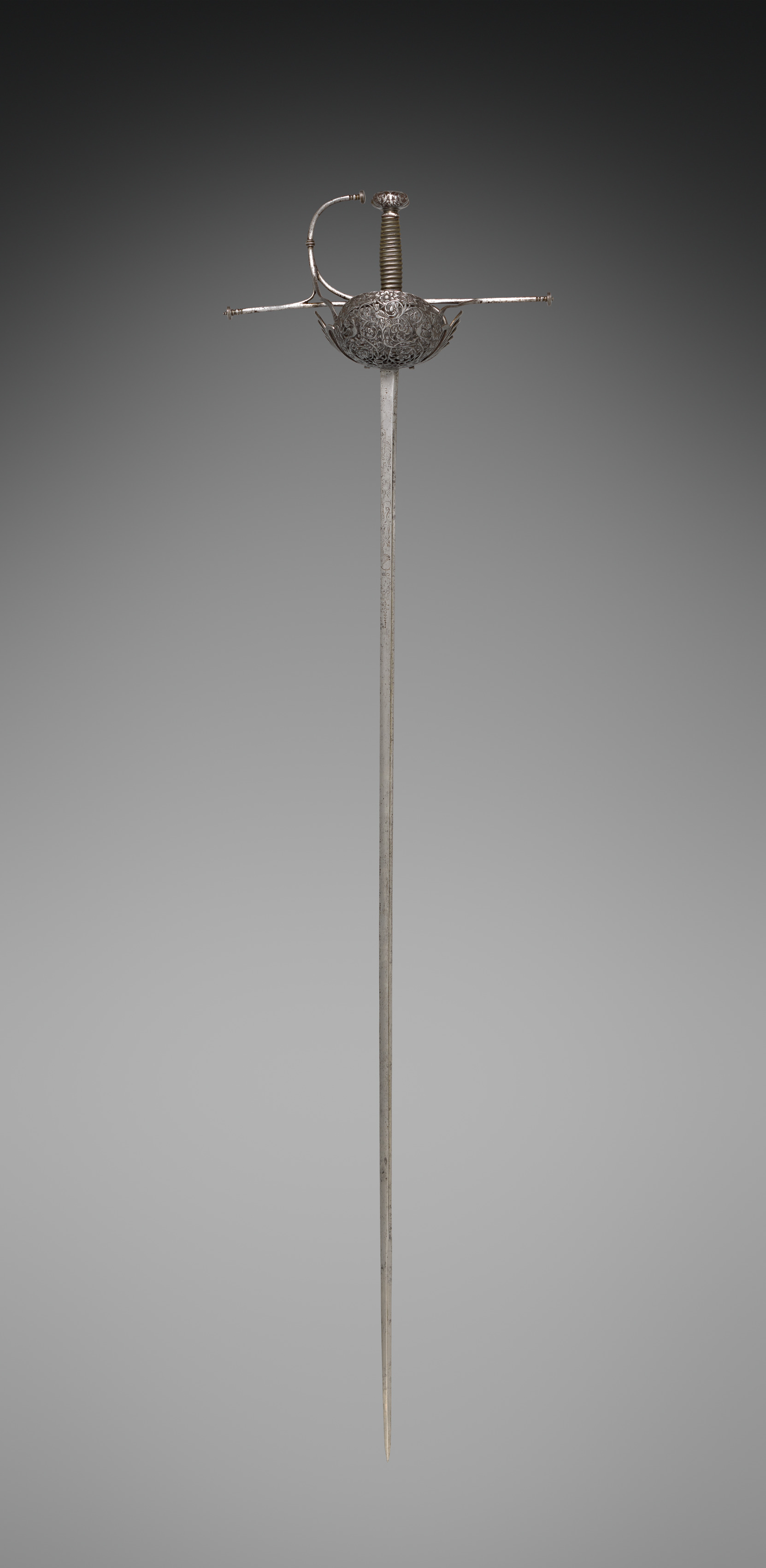
At Zoey Fashion Lab, we approach historical artifacts not as relics but as structural blueprints for reimagining contemporary form. The Spanish rapier—forged from steel, pierced and chiseled with precision, and mounted with leather and wood—represents a paradox of strength and fragility. Its origin in 16th-century Spain, a period of cultural flux and imperial ambition, mirrors our own era of digital fragmentation and identity reconstruction. This analysis deconstructs the rapier’s material DNA, proposing it as a new strand in the genetic code of avant-garde fashion—a fusion of weaponized geometry, tactile memory, and kinetic tension.
Material Deconstruction: Steel, Leather, and Wood
Steel: The Skeleton of Precision
The rapier’s steel blade, typically forged from high-carbon alloys, embodies controlled aggression. Its pierced and chiseled details—often decorative cutouts or etched patterns—serve a dual purpose: lightening the weapon while creating visual rhythm. In fashion, this translates to structural cutouts in garments that reveal underlying architecture. Imagine a corset with laser-cut steel boning, where negative space becomes a design element. The chiseled texture suggests a tactile topography—a surface that invites touch but resists intimacy. For Zoey Fashion Lab, steel’s cold neutrality is a canvas for deconstruction: a jacket with articulated steel panels that move like scales, yet remain rigid enough to define silhouette.
Leather and Wood: The Grip of Memory
The rapier’s grip—often wood wrapped in leather—introduces organic warmth to the metallic core. Leather, with its grain and patina, records the hand’s history; wood, with its grain and weight, anchors the wielder. This duality is critical for avant-garde design: a garment must be both armor and second skin. Consider a glove with segmented leather fingers over a steel mesh base—each material telling a different story of protection and exposure. The wood’s natural irregularities, when translated into textile, could inspire asymmetrical draping or unexpected stiffening in fabric. The grip’s ergonomic curve suggests how fashion can mold to the body while maintaining its own structure—a tension between comfort and constraint.
Technical Process: Piercing and Chiseling as Design Language
Piercing: Negative Space as Narrative
The rapier’s pierced holes—often circular or geometric—are not merely decorative; they reduce weight and create visual movement. In fashion, piercing translates to cutwork, laser etching, or perforated textiles. A dress with strategic piercings can reveal layers beneath, suggesting vulnerability while maintaining structural integrity. The negative space becomes a portal for light and shadow, shifting with the wearer’s motion. For Zoey Fashion Lab, this technique is a metaphor for deconstructing identity: each hole is a window into an inner self, a fragment of a larger narrative. The challenge lies in balancing piercings so the garment remains wearable—a lesson from the rapier, where too many holes weaken the blade.
Chiseling: Texture as Tension
Chiseled patterns—lines, grooves, or faceted surfaces—add tactile depth to the rapier’s steel. This technique echoes pleating, smocking, or embossing in fabric. A chiseled surface catches light differently, creating optical illusions of movement or stillness. In an avant-garde context, chiseling can be applied to leather, rubber, or even metallic-coated textiles. Imagine a coat with chiseled shoulder panels that mimic the rapier’s guard—both protective and aggressive. The process requires precision: each chisel stroke must be intentional, just as each seam in a garment must serve the overall silhouette. The rapier’s chiseling teaches us that texture is not ornament but function—it defines how a piece interacts with its environment.
Reference: The New DNA Strand
Genetic Code of Form and Function
The rapier’s design—its balance, weight distribution, and ergonomic grip—is a genetic blueprint for wearable architecture. The “New DNA Strand” reference implies a hybridization of historical and futuristic elements. In fashion, this means reprogramming the rapier’s principles into a new material language. For example, a skirt’s hemline might mimic the rapier’s tapered point, creating a dynamic asymmetry. The grip’s leather-wood fusion inspires mixed-media layering: a bodice with wooden beads sewn into leather panels, or a belt with steel clasps that echo the blade’s guard. The DNA strand is not linear but spiral—each turn revealing a new iteration of the original form.
Kinetic Tension: Movement and Stasis
The rapier is a weapon of precise motion—its weight and balance dictate how it moves. In fashion, this translates to kinetic design: garments that respond to the wearer’s body. A dress with weighted hems or flexible steel inserts can create controlled draping, echoing the rapier’s thrust and parry. The tension between stasis and movement is central to avant-garde style. A jacket with articulated steel panels might lock into place when standing but flex during walking—a living structure. The rapier’s DNA teaches us that fashion is not static; it is a performance of balance between the wearer and the garment.
Style: Avant-Garde Manifestation
Silhouette as Statement
The rapier’s long, slender blade suggests a vertical, elongated silhouette—a departure from bulky armor. In avant-garde fashion, this translates to sharp lines, exaggerated proportions, and architectural shoulders. A coat with a rapier-like point at the hem or sleeves can create a dramatic visual line. The guard—often ornate—inspires collars, cuffs, and epaulets that frame the face or hands. The key is minimalism with impact: every element must serve the overall form, just as every part of the rapier serves its function.
Color and Texture: Monochrome with Metal Accents
The rapier’s palette—steel gray, leather brown, wood dark—is monochromatic, relying on texture for depth. Avant-garde fashion can amplify this through metallic finishes, matte surfaces, and glossy accents. A dress in charcoal wool with steel thread embroidery mimics the chiseled patterns. Leather gloves with steel rivets echo the grip. The absence of color becomes a canvas for tactile contrast: smooth steel against rough leather, cold metal against warm wood. This restraint forces the viewer to focus on form and detail—the essence of deconstruction.
Conclusion: The Rapier as Fashion’s Future
The Spanish rapier is more than a weapon; it is a masterclass in material dialogue. Its steel, leather, and wood—pierced, chiseled, and balanced—offer a new DNA strand for Zoey Fashion Lab’s avant-garde explorations. By deconstructing its form, we unlock principles of tension, negative space, and kinetic design that can revolutionize how garments are conceived and worn. The rapier teaches us that strength lies in precision, not mass; that beauty emerges from function; and that the most powerful designs are those that move with the body, not against it. As we continue to deconstruct and reconstruct, the rapier stands as a timeless template—a steel thread connecting history to the future of fashion.