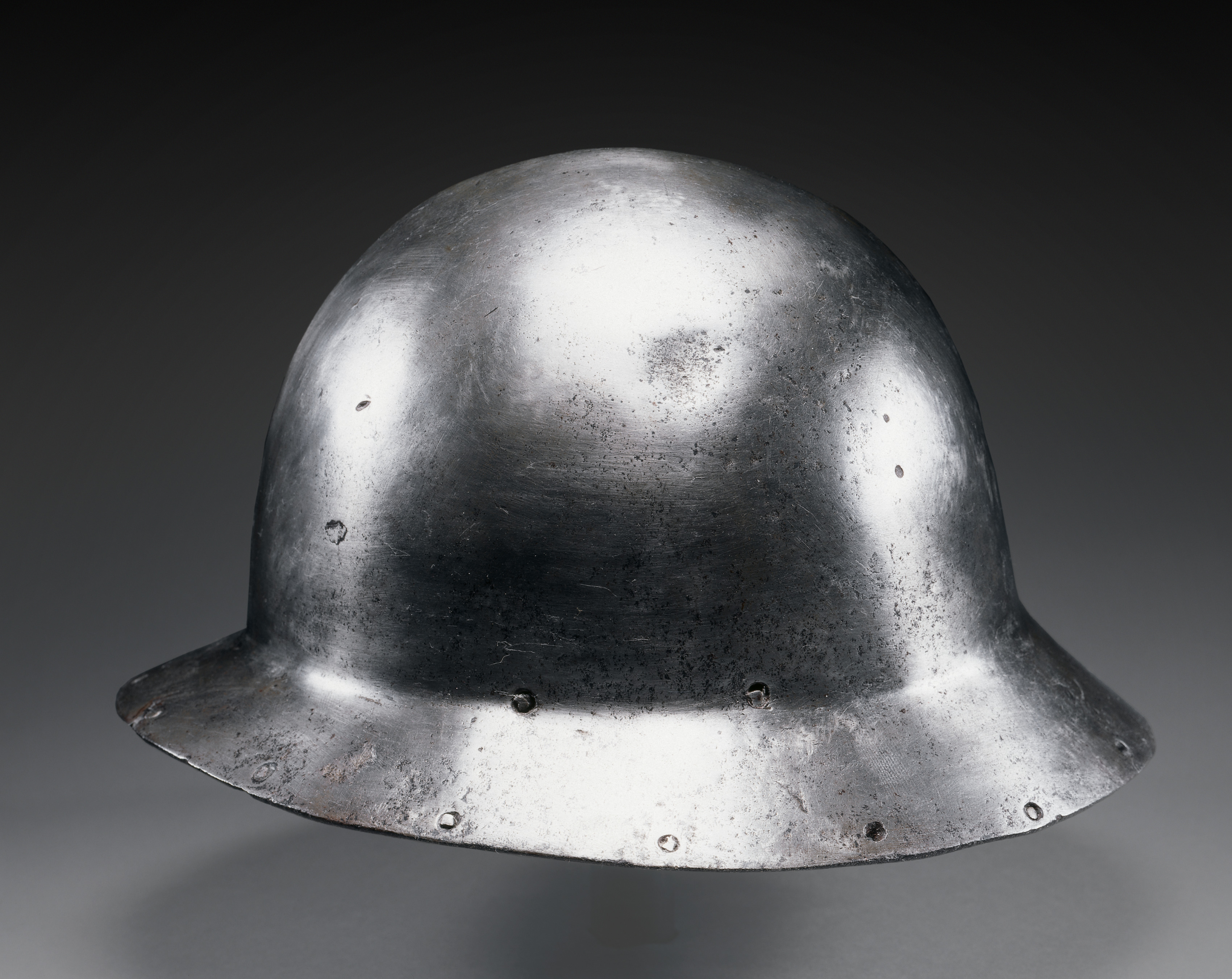
Kettle Hat (War Hat) Deconstruction: An Avant-Garde Reinterpretation for Zoey Fashion Lab
At Zoey Fashion Lab, the role of the Chief Fabric Deconstructionist extends beyond mere material analysis; it involves the radical recontextualization of historical artifacts into contemporary, avant-garde fashion statements. The subject of this analysis is the Kettle Hat (War Hat), a 15th-century Italian steel helmet. This piece, typically associated with medieval warfare, is now examined through the lens of a "New DNA Strand"—a conceptual framework that reimagines its structural, textural, and symbolic elements as foundational codes for a cutting-edge design. This report deconstructs the original artifact, identifies key technical and aesthetic components, and proposes an avant-garde reinterpretation that challenges conventional fashion norms.
Historical and Technical Context of the 15th-Century Kettle Hat
The Kettle Hat, known in Italian as the celata or cervelliera, was a staple of infantry and cavalry armor during the 15th century. Its design was pragmatic: a wide brim and a domed crown, typically forged from a single sheet of steel. The brim provided essential protection against downward blows, while the crown shielded the skull. The original artifact in question is crafted from steel, a material chosen for its durability and resistance to penetration. The construction involved hot forging, where the metal was heated and hammered into shape, followed by quenching and tempering to achieve hardness. The surface often featured a dull, hammered finish or a polished gleam, depending on the wearer's status. The interior was lined with leather or padded cloth for comfort, secured by a leather chin strap.
Key technical attributes of the original Kettle Hat include:
- Material: Low-carbon steel, approximately 1.5-2 mm thick, weighing 1.5-2.5 kg.
- Form: A hemispherical crown with a flared, asymmetrical brim (wider at the front and sides, narrower at the back).
- Finish: Hammered texture or polished surface, with evidence of rust patina.
- Function: Defense against blunt and edged weapons, with ventilation holes for breathability.
For Zoey Fashion Lab, this utilitarian object presents a paradox: it is both a symbol of violence and a masterpiece of ergonomic design. The deconstruction process must extract these dualities—hardness versus comfort, protection versus exposure—and translate them into an avant-garde garment that speaks to modern identity.
The "New DNA Strand" Concept: Deconstructing the Kettle Hat
The "New DNA Strand" is a metaphorical framework that treats the original artifact's physical and conceptual properties as genetic material to be recombined. For the Kettle Hat, we identify three core genetic markers: structural geometry, textural contrast, and functional symbolism. These markers are isolated, mutated, and re-embedded into a new design language that is both recognizable and alien.
1. Structural Geometry: The Dome and Brim as Silhouette
The Kettle Hat's defining geometric elements—the hemispherical dome and the sweeping brim—are deconstructed into a modular silhouette. The dome becomes a sculptural shoulder piece or a collar, while the brim transforms into a floating, asymmetrical hemline or a detachable cape. The original steel's rigidity is replaced with carbon fiber-reinforced polymers and memory-shape alloys, allowing the form to be both structural and flexible. The brim's asymmetry is exaggerated: one side extends into a dramatic, wing-like structure, while the other is cropped to reveal the wearer's neck. This creates a visual tension between protection and vulnerability, a core theme in avant-garde fashion.
The crown's dome is reinterpreted as a negative-space helmet—a transparent, UV-reactive acrylic shell that mimics the original's curvature but is hollow, allowing the wearer's hair to be styled into a "crown" within. This inversion of the original's protective function turns the hat into a display piece, emphasizing the head as a site of identity rather than a target.
2. Textural Contrast: Steel, Rust, and Leather Reimagined
The original Kettle Hat's surface textures—hammered steel, polished highlights, and rust patina—are extracted and applied to non-metallic materials. The hammered texture is replicated using 3D-printed thermoplastic polyurethane (TPU) with a metallic finish, creating a lightweight, flexible skin that can be draped over the body. The rust patina is translated into hand-dyed, oxidized silk organza and crushed velvet, producing a rich, earth-toned gradient that evokes decay and age. The leather interior lining is reimagined as laser-cut, distressed calfskin used for straps, harnesses, and binding, adding a tactile, organic element to the cold, metallic exterior.
This textural juxtaposition—hard versus soft, polished versus raw—creates a dynamic visual narrative. For example, a steel-gray, hammered TPU bodice is paired with a rust-dyed, flowing skirt, the latter mimicking the original's brim movement. The leather straps are used to cinch the waist, echoing the chin strap's function but now as a deliberate design feature that emphasizes the body's contours.
3. Functional Symbolism: Protection as Performance
The Kettle Hat's primary function—protection—is subverted into a commentary on modern vulnerability. In the avant-garde reinterpretation, the hat's defensive properties are abstracted into wearable armor that protects not the body but the psyche. A detachable face shield made from electrochromic glass (which can switch between transparent and opaque) is integrated into the brim, allowing the wearer to control their visibility and social interaction. This references the original's visor but with a contemporary, digital twist.
The original's ventilation holes are reimagined as perforated patterns on the garment, allowing for breathability and visual interest. These patterns are laser-cut into the TPU or silk, forming a constellation-like design that mirrors the stars navigated by 15th-century soldiers. The chin strap becomes a choker necklace with a magnetic closure, serving as a focal point that bridges the historical and the modern.
Avant-Garde Design Proposal: The "Celata Reborn" Collection
Based on this deconstruction, Zoey Fashion Lab proposes the "Celata Reborn" collection, a capsule line of three key pieces that embody the New DNA Strand of the Kettle Hat.
Piece 1: The Dome Bodice
A sculptural top constructed from hammered TPU panels that form a dome-like silhouette over the shoulders and chest. The front is open, revealing a rust-dyed silk underlayer that cascades into a floor-length train. The back features a carbon fiber frame that supports the dome's weight, while leather straps crisscross the spine. This piece deconstructs the helmet's crown into a wearable torso armor, emphasizing protection as a form of empowerment.
Piece 2: The Brim Skirt
An asymmetrical, multi-layered skirt that mimics the Kettle Hat's brim. The outer layer is a steel-gray, 3D-printed mesh with a hammered texture, while the inner layers are oxidized silk organza in rust and bronze tones. The hemline is uneven: one side dips to the floor, the other rises to mid-thigh. The skirt is secured with a leather belt that features a replica of the original hat's rivet details. This piece deconstructs the brim's protective sweep into a fluid, dynamic garment that moves with the wearer.
Piece 3: The Face Shield Choker
A wearable accessory that combines the chin strap and visor. A leather choker with magnetic clasps supports a curved, electrochromic glass shield that can be raised or lowered. The shield is etched with a pattern of ventilation holes, and when activated, it transitions from transparent to opaque, allowing the wearer to control their visibility. This piece deconstructs the original's defensive function into a tool for social performance, challenging norms of exposure and concealment.
Conclusion: The Future of Deconstructed History
The Kettle Hat, when deconstructed through the New DNA Strand framework, reveals itself as a rich source of avant-garde inspiration. By isolating its structural geometry, textural contrast, and functional symbolism, Zoey Fashion Lab transforms a 15th-century war artifact into a commentary on contemporary identity, vulnerability, and empowerment. The "Celata Reborn" collection does not merely replicate the past; it mutates it, creating a new genetic code for fashion that is both historically resonant and radically forward-thinking. This analysis underscores the potential of historical artifacts to inform cutting-edge design, proving that the most innovative fashion often lies in the deconstruction of what came before.